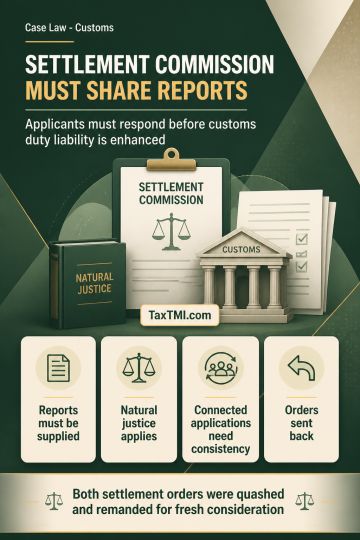
Opportunity to respond to jurisdictional reports is mandatory before customs settlement duty enhancement; connected applications require consistent ad...
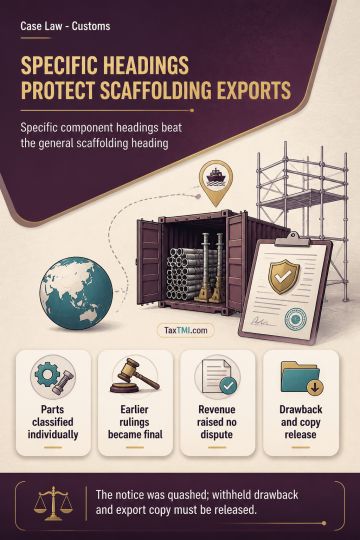
Specific customs headings for scaffolding components prevail over general classification, invalidating misclassification proceedings and enabling with...
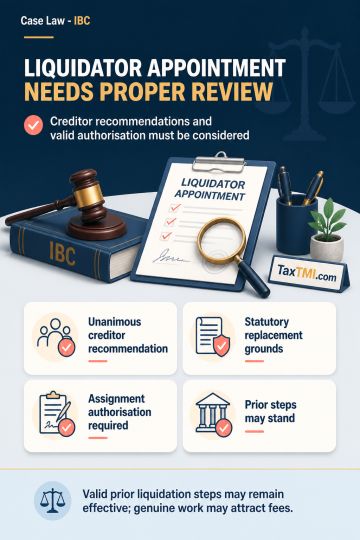
Liquidator appointment under Section 34 requires consideration of creditor recommendations, valid professional authorisation, and preservation of vali...
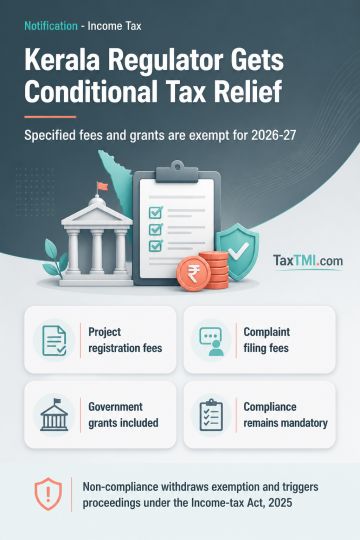
Income-tax exemption for specified regulatory fees and government grants applies subject to non-commercial activity and continuing compliance conditio...
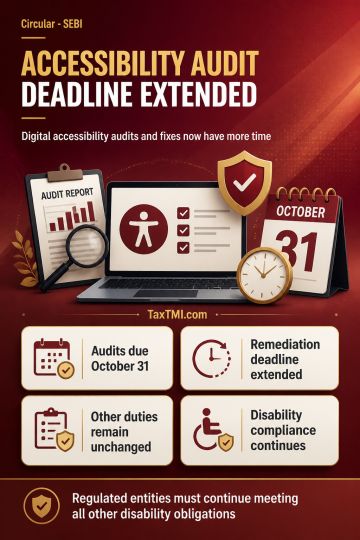
Digital accessibility audit and remediation deadlines extended, while all other disability-compliance obligations for regulated entities remain unchan...
Page of 4803
Press 'Enter' after typing page number.
621 to 640 of 96047 Results
❮
❯
❯❯
0 / 200
Expand Note
Add to Folder
No Folders have been created
+
Are you sure you want to delete "My most important" ?
AAR ruled that potable drinking water supplied through tanker lorries to government institutions and private customers qualifies for GST exemption under Serial No. 99 of Notification 02/2017-Central Tax (Rate). The applicant collected water from wells, conducted purification through filtration and chlorination to meet drinking water standards, and supplied in bulk quantities via tankers with 2,000-30,000 kiloliter capacity. The Authority determined that basic purification methods like chlorination and filtration used by public utilities do not disqualify the water from exemption, and since water was not supplied in sealed containers but transported in bulk through tankers, it falls within the exempted category under the GST framework.
AAR ruled that potable drinking water supplied through tanker lorries to government institutions and private customers qualifies for GST exemption under Serial No. 99 of Notification 02/2017-Central Tax (Rate). The applicant collected water from wells, conducted purification through filtration and chlorination to meet drinking water standards, and supplied in bulk quantities via tankers with 2,000-30,000 kiloliter capacity. The Authority determined that basic purification methods like chlorination and filtration used by public utilities do not disqualify the water from exemption, and since water was not supplied in sealed containers but transported in bulk through tankers, it falls within the exempted category under the GST framework.
Note: It is a system-generated summary and is for quick reference only.
 TaxTMI
 of 4803





 Join Channel


 TaxTMI