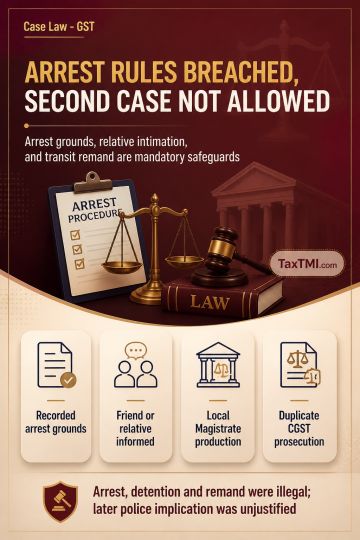
Arrest safeguards require disclosed grounds, relative intimation and transit remand, while duplicate prosecution under the CGST framework is unsustain...
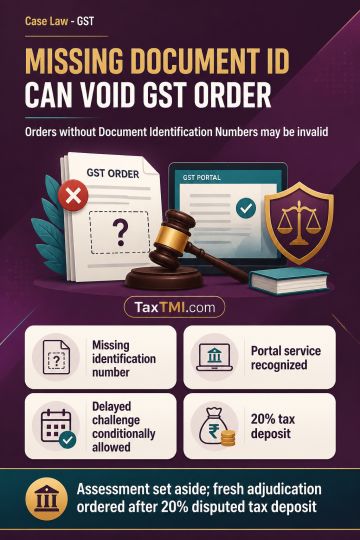
Document Identification Number defects can invalidate GST assessments, with delayed challenges entertained conditionally where patent irregularities e...
Windmill commissioning evidence supported higher depreciation where grid connection and electricity generation proved operational use before the relev...
Pharmaceutical promotion and transfer-pricing comparability principles limited disallowances, while uncorroborated search allegations and unsupported ...
Business expenditure substantiation supports scrap credits, statutory payments and expense claims, while depreciation requires proof of actual busines...
The HC quashed the GST registration cancellation order and penalty imposed on the petitioner for non-filing of returns from April 2023 to February 2025. The court held that the administrative authority's rejection of the petitioner's delay condonation application violated principles of natural justice by failing to provide reasons or opportunity of hearing. Emphasizing that reasons constitute the heartbeat of every conclusion, the court ruled that orders without valid reasons are legally unsustainable and amount to denial of justice. The absence of reasoning renders administrative decisions arbitrary and subject to judicial review. The matter was remanded to the Appellate Authority with directions to conduct de-novo proceedings and pass a reasoned order after affording due hearing opportunity to the petitioner.
The HC quashed the GST registration cancellation order and penalty imposed on the petitioner for non-filing of returns from April 2023 to February 2025. The court held that the administrative authority's rejection of the petitioner's delay condonation application violated principles of natural justice by failing to provide reasons or opportunity of hearing. Emphasizing that reasons constitute the heartbeat of every conclusion, the court ruled that orders without valid reasons are legally unsustainable and amount to denial of justice. The absence of reasoning renders administrative decisions arbitrary and subject to judicial review. The matter was remanded to the Appellate Authority with directions to conduct de-novo proceedings and pass a reasoned order after affording due hearing opportunity to the petitioner.
Note: It is a system-generated summary and is for quick reference only.
 TaxTMI
 of 4805



















 Join Channel


 TaxTMI