Necessary-party requirements limit impleadment of independent entities, while deferred consideration does not create an appealable adverse determinati...
Food supplement classification requires common parlance and authoritative tests, preventing treatment as proprietary Ayurvedic medicines without suppo...
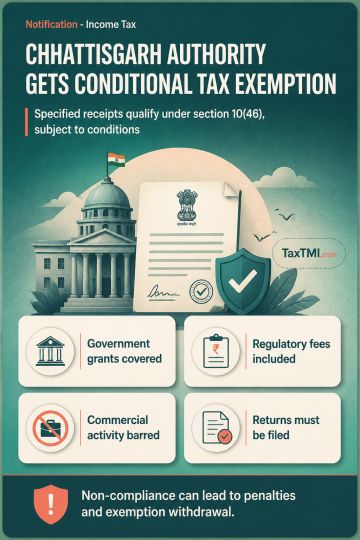
Specified regulatory authority income receives conditional tax exemption, subject to non-commercial activity, unchanged income character, and return f...
Tax exemption for regulatory authority income applies retrospectively, subject to non-commercial activity, unchanged income sources, and return-filing...
Input tax credit conditions remain constitutionally valid, with eligible recipient claims considered under GST circulars and retrospective filing dead...
The HC quashed the GST registration cancellation order and penalty imposed on the petitioner for non-filing of returns from April 2023 to February 2025. The court held that the administrative authority's rejection of the petitioner's delay condonation application violated principles of natural justice by failing to provide reasons or opportunity of hearing. Emphasizing that reasons constitute the heartbeat of every conclusion, the court ruled that orders without valid reasons are legally unsustainable and amount to denial of justice. The absence of reasoning renders administrative decisions arbitrary and subject to judicial review. The matter was remanded to the Appellate Authority with directions to conduct de-novo proceedings and pass a reasoned order after affording due hearing opportunity to the petitioner.
The HC quashed the GST registration cancellation order and penalty imposed on the petitioner for non-filing of returns from April 2023 to February 2025. The court held that the administrative authority's rejection of the petitioner's delay condonation application violated principles of natural justice by failing to provide reasons or opportunity of hearing. Emphasizing that reasons constitute the heartbeat of every conclusion, the court ruled that orders without valid reasons are legally unsustainable and amount to denial of justice. The absence of reasoning renders administrative decisions arbitrary and subject to judicial review. The matter was remanded to the Appellate Authority with directions to conduct de-novo proceedings and pass a reasoned order after affording due hearing opportunity to the petitioner.
Note: It is a system-generated summary and is for quick reference only.
 TaxTMI
 of 4805


















 Join Channel


 TaxTMI