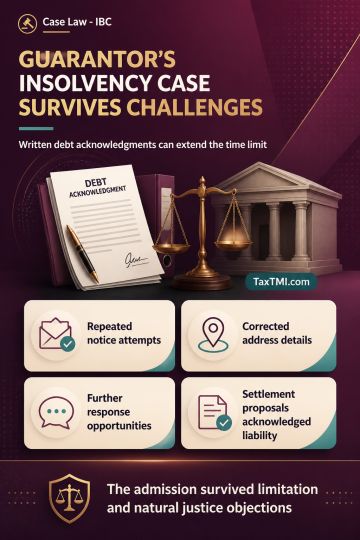
Service of notice and contractual debt acknowledgment preserved insolvency admission against a corporate guarantor despite limitation and natural just...
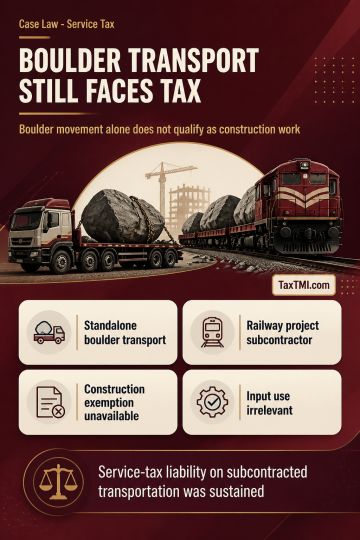
Original works exemption excludes standalone boulder transportation, leaving subcontracted railway-project transport services subject to service tax l...
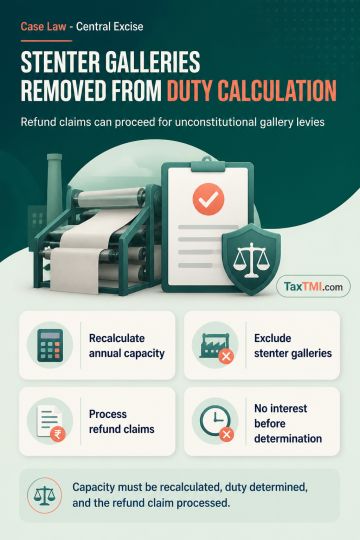
Annual production capacity determinations excluding stenter galleries support refunds for unconstitutional excise levies without an unjust-enrichment ...
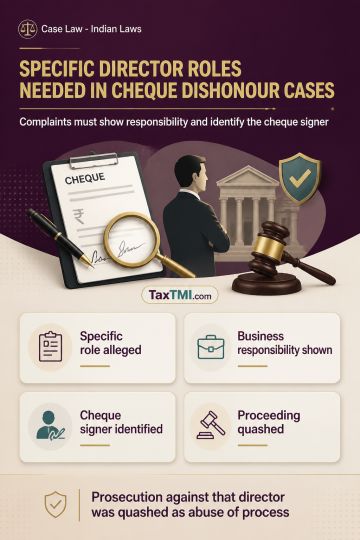
Vicarious liability for cheque dishonour requires specific allegations of responsibility and cheque signatory; generic director allegations cannot sus...
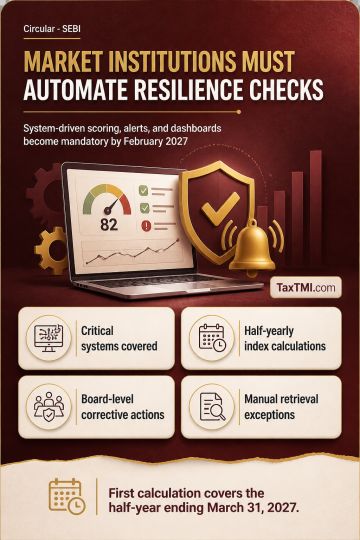
IT Resilience Index requires market infrastructure institutions to automate resilience scoring, early warnings, and continuous service-delivery monito...
HC allowed appellant's appeal, quashing the Single Judge's order denying customs exemption under Notification No.153/93/Cus for Software Technology Park imports. Despite Revenue's contention that "prior permission" from Deputy Commissioner of Commercial Taxes was mandatory, HC applied doctrine of substantial compliance, finding appellant had substantially met notification requirements. Court distinguished between procedural versus substantive conditions, noting inter-departmental delays cannot deny legitimate exemption benefits. Appellant had timely applied for permissions, imported telematic equipment within prescribed monetary limits, and utilized goods for 100% export-oriented software development as intended by notification. HC emphasized legislative intent to promote foreign exchange earnings through exports should not be frustrated by technical objections when substantive compliance achieved.
HC allowed appellant's appeal, quashing the Single Judge's order denying customs exemption under Notification No.153/93/Cus for Software Technology Park imports. Despite Revenue's contention that "prior permission" from Deputy Commissioner of Commercial Taxes was mandatory, HC applied doctrine of substantial compliance, finding appellant had substantially met notification requirements. Court distinguished between procedural versus substantive conditions, noting inter-departmental delays cannot deny legitimate exemption benefits. Appellant had timely applied for permissions, imported telematic equipment within prescribed monetary limits, and utilized goods for 100% export-oriented software development as intended by notification. HC emphasized legislative intent to promote foreign exchange earnings through exports should not be frustrated by technical objections when substantive compliance achieved.
Note: It is a system-generated summary and is for quick reference only.
 TaxTMI
  TaxTMI
 of 4828







 Join Channel