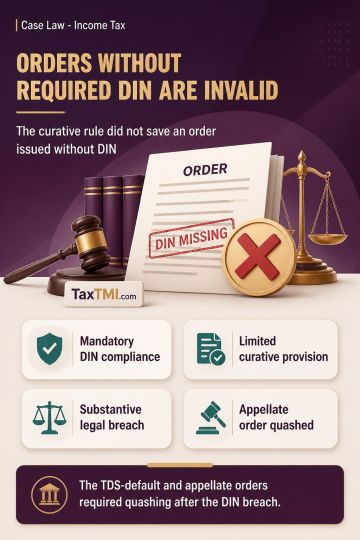
Document Identification Number compliance renders TDS-default orders invalid where mandatory DIN requirements are breached and curative provision does...
Anti-profiteering obligations survive business demerger, complaint withdrawal, and customized supply arrangements where rate-reduction benefits are no...
The ITAT held that Convertible Debentures (CCDs) and Optionally Convertible Debentures (OCDs) qualify as rupee-denominated bonds under Section 194LD, entitling the assessee to concessional tax rate of 5.46%. The tribunal determined that prior to conversion, CCDs and OCDs retain debenture characteristics with identical rights and obligations as regular debentures. The conversion option does not alter their inherent debt instrument nature. Since these instruments are rupee-denominated, protecting Indian companies from foreign exchange risks, they fall within Section 194LD's scope. The distinction between CCDs/OCDs and Non-Convertible Debentures (NCDs) is immaterial for tax purposes as all constitute debt instruments. The tax authorities erred in denying Section 194LD benefits, and the assessee's appeal was sustained.
The ITAT held that Convertible Debentures (CCDs) and Optionally Convertible Debentures (OCDs) qualify as rupee-denominated bonds under Section 194LD, entitling the assessee to concessional tax rate of 5.46%. The tribunal determined that prior to conversion, CCDs and OCDs retain debenture characteristics with identical rights and obligations as regular debentures. The conversion option does not alter their inherent debt instrument nature. Since these instruments are rupee-denominated, protecting Indian companies from foreign exchange risks, they fall within Section 194LD's scope. The distinction between CCDs/OCDs and Non-Convertible Debentures (NCDs) is immaterial for tax purposes as all constitute debt instruments. The tax authorities erred in denying Section 194LD benefits, and the assessee's appeal was sustained.
Note: It is a system-generated summary and is for quick reference only.
 TaxTMI
  TaxTMI
 of 4918