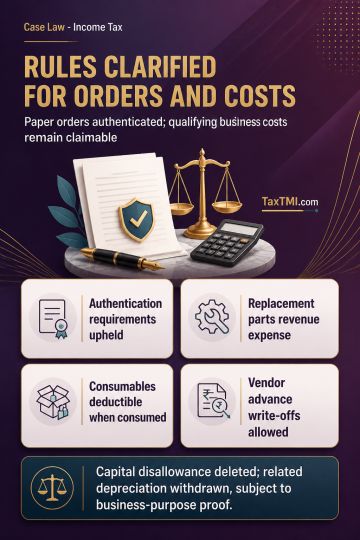
Authentication of paper assessment orders upheld, while qualifying repairs, consumables and vendor advance write-offs remain deductible business claim...
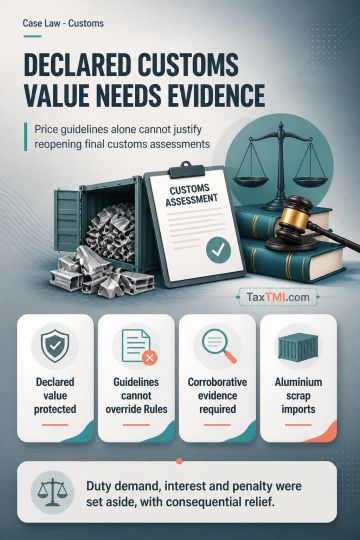
Transaction value cannot be rejected solely on non-statutory valuation guidelines without corroborative evidence supporting reassessment of final cust...
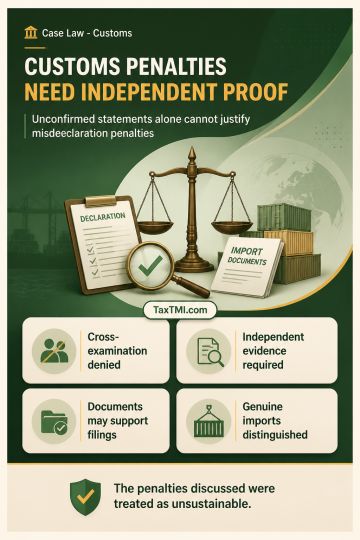
Cross-examination rights and corroborated evidence limit customs penalties for misdeclaration in genuine import transactions involving documented clea...
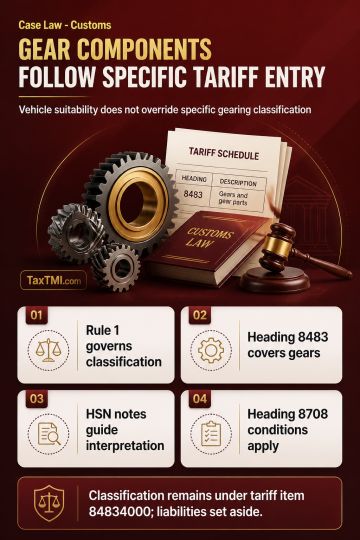
Tariff classification of vehicle gear components follows the specific gearing entry, displacing motor-vehicle parts classification and related liabili...
Necessary-party requirements limit impleadment of independent entities, while deferred consideration does not create an appealable adverse determinati...
The HC dismissed petitioners' challenge to investigation proceedings concerning large-scale tax evasion through fraudulent input tax credit under HPGST/CGST Act. The court held that Cr.P.C provisions apply to GST Act proceedings absent contrary provisions, citing Radhika Agarwal v. Union of India. Petitioners' contention that investigation was improper because officials failed to contact Delhi GST authorities was rejected. The court found that discovering non-existent entities at invoice addresses sufficiently established prima facie case of fake invoices. Following Mukesh Singh precedent, the court ruled investigation validity is not vitiated merely because departmental officials conducted it. The HC emphasized that while exercising inherent power, courts examine prima facie cases without evaluating evidence creditworthiness, which remains trial court's domain. Consequently, the complaint could not be quashed based on alleged investigative deficiencies.
The HC dismissed petitioners' challenge to investigation proceedings concerning large-scale tax evasion through fraudulent input tax credit under HPGST/CGST Act. The court held that Cr.P.C provisions apply to GST Act proceedings absent contrary provisions, citing Radhika Agarwal v. Union of India. Petitioners' contention that investigation was improper because officials failed to contact Delhi GST authorities was rejected. The court found that discovering non-existent entities at invoice addresses sufficiently established prima facie case of fake invoices. Following Mukesh Singh precedent, the court ruled investigation validity is not vitiated merely because departmental officials conducted it. The HC emphasized that while exercising inherent power, courts examine prima facie cases without evaluating evidence creditworthiness, which remains trial court's domain. Consequently, the complaint could not be quashed based on alleged investigative deficiencies.
Note: It is a system-generated summary and is for quick reference only.
 TaxTMI
 of 4803











 Join Channel


 TaxTMI
