Transaction value rejection requires reliable corroboration; refundable VAT is excluded and temporary registration does not defeat new-vehicle exempti...
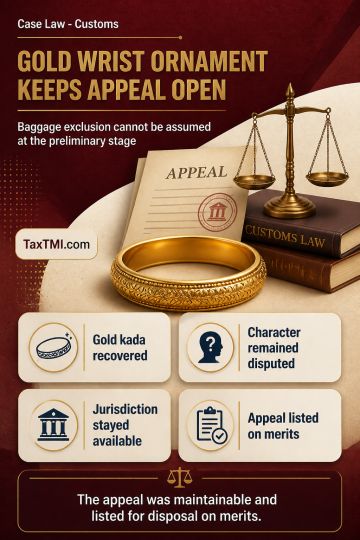
Appellate jurisdiction remains available where a wrist-worn gold ornament cannot conclusively be characterised as imported baggage at the preliminary ...
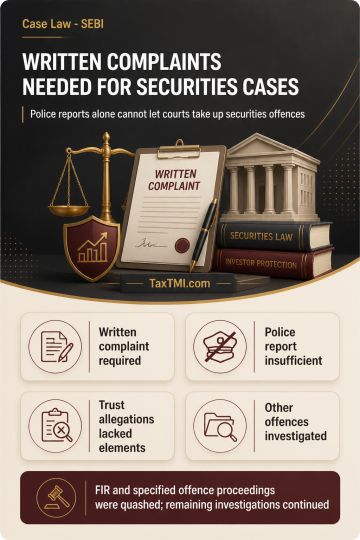
Written complaint requirement bars cognizance on police reports for securities offences, while unsupported breach of trust and cheating allegations fa...
Page of 4801
Press 'Enter' after typing page number.
341 to 360 of 96001 Results
❮
❯
❯❯
0 / 200
Expand Note
Add to Folder
No Folders have been created
+
Are you sure you want to delete "My most important" ?
The HC dismissed petitioners' challenge to investigation proceedings concerning large-scale tax evasion through fraudulent input tax credit under HPGST/CGST Act. The court held that Cr.P.C provisions apply to GST Act proceedings absent contrary provisions, citing Radhika Agarwal v. Union of India. Petitioners' contention that investigation was improper because officials failed to contact Delhi GST authorities was rejected. The court found that discovering non-existent entities at invoice addresses sufficiently established prima facie case of fake invoices. Following Mukesh Singh precedent, the court ruled investigation validity is not vitiated merely because departmental officials conducted it. The HC emphasized that while exercising inherent power, courts examine prima facie cases without evaluating evidence creditworthiness, which remains trial court's domain. Consequently, the complaint could not be quashed based on alleged investigative deficiencies.
The HC dismissed petitioners' challenge to investigation proceedings concerning large-scale tax evasion through fraudulent input tax credit under HPGST/CGST Act. The court held that Cr.P.C provisions apply to GST Act proceedings absent contrary provisions, citing Radhika Agarwal v. Union of India. Petitioners' contention that investigation was improper because officials failed to contact Delhi GST authorities was rejected. The court found that discovering non-existent entities at invoice addresses sufficiently established prima facie case of fake invoices. Following Mukesh Singh precedent, the court ruled investigation validity is not vitiated merely because departmental officials conducted it. The HC emphasized that while exercising inherent power, courts examine prima facie cases without evaluating evidence creditworthiness, which remains trial court's domain. Consequently, the complaint could not be quashed based on alleged investigative deficiencies.
Note: It is a system-generated summary and is for quick reference only.
 TaxTMI
 of 4801






 Join Channel


 TaxTMI