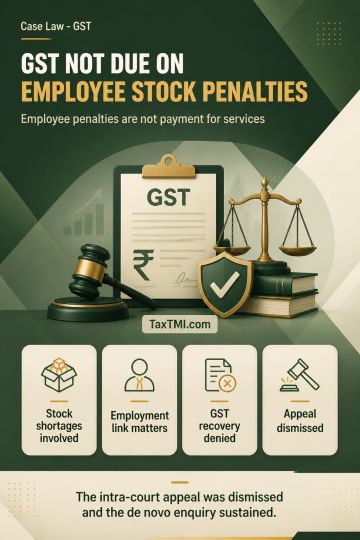
Employee stock-shortage penalties do not constitute consideration for services, preventing GST collection under Schedule II in employment relationship...
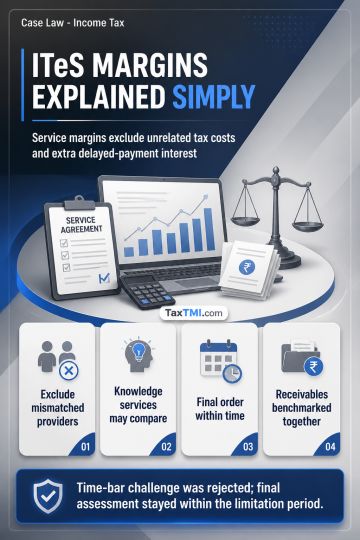
Transfer-pricing treatment of ITeS margins excludes pass-through tax recoveries and separate delayed-receivables interest after working-capital adjust...
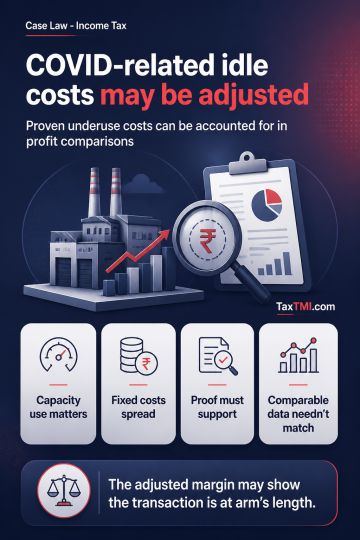
Capacity-utilisation adjustments under TNMM can neutralise substantiated COVID-related idle costs where underutilisation materially affects profitabil...
Page of 4830
Press 'Enter' after typing page number.
181 to 200 of 96587 Results
❮
❯
❯❯
0 / 200
Expand Note
Add to Folder
No Folders have been created
+
Are you sure you want to delete "My most important" ?
HC quashed reassessment notice issued beyond four-year limitation period, holding it constituted impermissible review rather than valid reopening. Court determined that reassessment proceedings require tangible material beyond existing records to form requisite belief regarding income escapement. AO's reliance solely on previously filed return accepted under section 143(1) without additional material constituted arbitrary exercise of powers under section 147. Following Orient Craft Ltd precedent, HC ruled that absence of tangible material renders reopening without jurisdiction, distinguishing between legitimate reassessment based on new evidence versus prohibited review of earlier proceedings. Assessment invalidated in assessee's favor due to lack of substantive grounds for reopening.
HC quashed reassessment notice issued beyond four-year limitation period, holding it constituted impermissible review rather than valid reopening. Court determined that reassessment proceedings require tangible material beyond existing records to form requisite belief regarding income escapement. AO's reliance solely on previously filed return accepted under section 143(1) without additional material constituted arbitrary exercise of powers under section 147. Following Orient Craft Ltd precedent, HC ruled that absence of tangible material renders reopening without jurisdiction, distinguishing between legitimate reassessment based on new evidence versus prohibited review of earlier proceedings. Assessment invalidated in assessee's favor due to lack of substantive grounds for reopening.
Note: It is a system-generated summary and is for quick reference only.
 TaxTMI
  TaxTMI
 of 4830



 Join Channel


