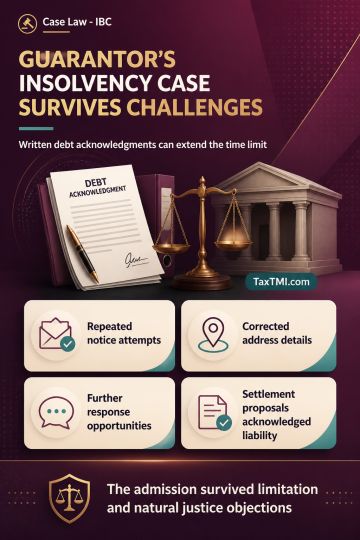
Service of notice and contractual debt acknowledgment preserved insolvency admission against a corporate guarantor despite limitation and natural just...
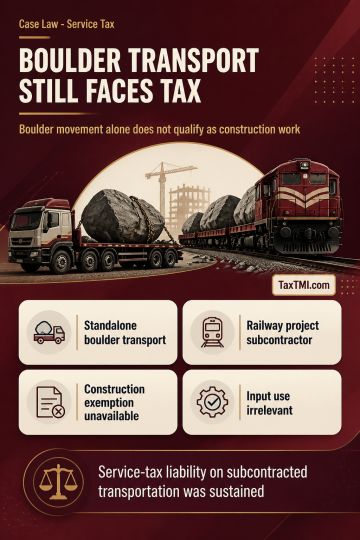
Original works exemption excludes standalone boulder transportation, leaving subcontracted railway-project transport services subject to service tax l...
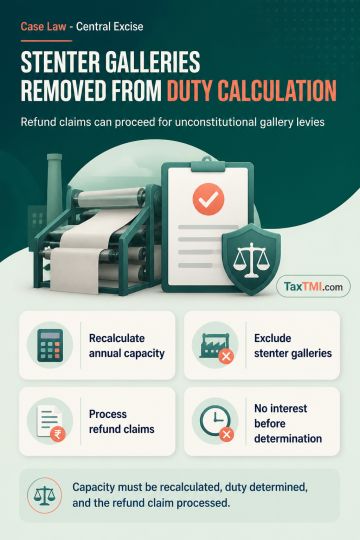
Annual production capacity determinations excluding stenter galleries support refunds for unconstitutional excise levies without an unjust-enrichment ...
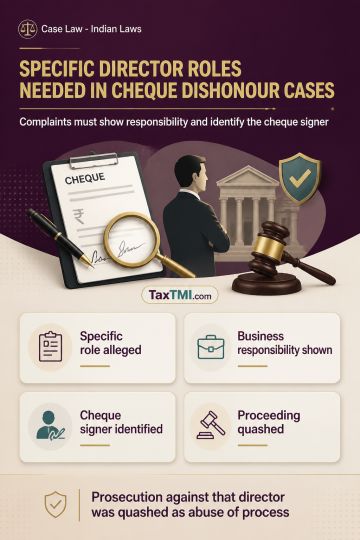
Vicarious liability for cheque dishonour requires specific allegations of responsibility and cheque signatory; generic director allegations cannot sus...
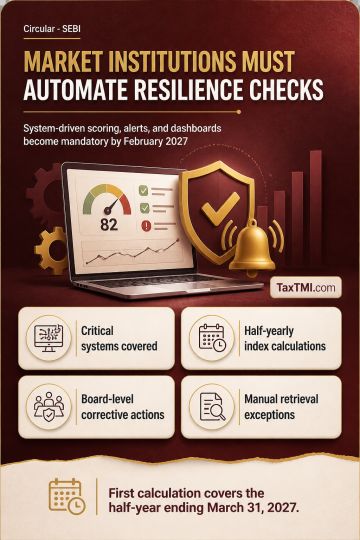
IT Resilience Index requires market infrastructure institutions to automate resilience scoring, early warnings, and continuous service-delivery monito...
HC dismissed the appeal and upheld the winding-up order under Section 433(e) of the Companies Act, 1956. The appellant-company failed to refund a Rs.50 lakh security deposit after contract termination despite its manufacturing business declining and supply difficulties. The court found no bona fide dispute existed, rejecting the company's contradictory and implausible defenses as lacking merit. Financial institutions had initiated recovery proceedings for crores, a receiver was appointed, and no production activities occurred for over five years. The company's offers to pay during proceedings without actual payment, combined with its financial misfortunes, were insufficient to resist winding-up. The court concluded the appellant-company was liable to repay the security deposit with interest, affirming the lower court's judgment.
HC dismissed the appeal and upheld the winding-up order under Section 433(e) of the Companies Act, 1956. The appellant-company failed to refund a Rs.50 lakh security deposit after contract termination despite its manufacturing business declining and supply difficulties. The court found no bona fide dispute existed, rejecting the company's contradictory and implausible defenses as lacking merit. Financial institutions had initiated recovery proceedings for crores, a receiver was appointed, and no production activities occurred for over five years. The company's offers to pay during proceedings without actual payment, combined with its financial misfortunes, were insufficient to resist winding-up. The court concluded the appellant-company was liable to repay the security deposit with interest, affirming the lower court's judgment.
Note: It is a system-generated summary and is for quick reference only.
 TaxTMI
  TaxTMI
 of 4828




 Join Channel