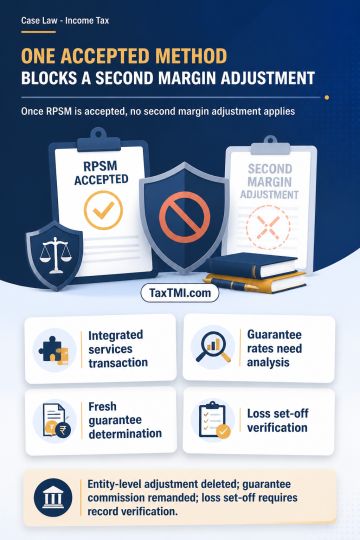
Form 26AS evidence requires successor-entity accounting verification after business transfer, while invoice-supported related-party advertising expend...
Money-laundering judgment timing requires awaiting the scheduled-offence decision despite continuation of the underlying trial where outcomes directly...
Accredited investor eligibility expands through securities-market exposure, while alternative investment fund disputes require prescribed resolution a...
Page of 4916
Press 'Enter' after typing page number.
41 to 60 of 98302 Results
❮
❯
❯❯
0 / 200
Expand Note
Add to Folder
No Folders have been created
+
Are you sure you want to delete "My most important" ?
The Sultanate of Oman enacted legislation by royal decree establishing a 5% personal income tax effective 2028, marking the first such levy among Gulf Cooperation Council member states. The tax applies exclusively to high earners exceeding $109,000 annually, representing approximately 1% of Oman's population. The Minister of Economy justified the measure as essential for fiscal diversification, citing oil and gas revenues comprising up to 85% of public income depending on market conditions. This legislative initiative forms part of Oman's Vision 2040 economic transformation strategy, aimed at reducing hydrocarbon dependency and establishing a technology-based economy. The reform follows previous fiscal measures implemented in 2020 targeting public debt reduction and economic development enhancement.
The Sultanate of Oman enacted legislation by royal decree establishing a 5% personal income tax effective 2028, marking the first such levy among Gulf Cooperation Council member states. The tax applies exclusively to high earners exceeding $109,000 annually, representing approximately 1% of Oman's population. The Minister of Economy justified the measure as essential for fiscal diversification, citing oil and gas revenues comprising up to 85% of public income depending on market conditions. This legislative initiative forms part of Oman's Vision 2040 economic transformation strategy, aimed at reducing hydrocarbon dependency and establishing a technology-based economy. The reform follows previous fiscal measures implemented in 2020 targeting public debt reduction and economic development enhancement.
Note: It is a system-generated summary and is for quick reference only.
 TaxTMI
 TaxTMI

 of 4916