GST refunds for cancelled air tickets remain available when passenger reimbursements defeat unjust enrichment and credit-note adjustment is unavailabl...
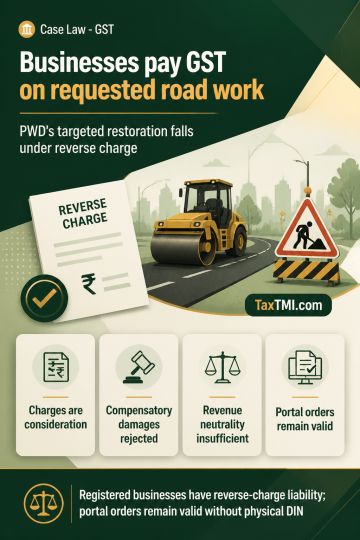
Request-driven road restoration attracts reverse-charge GST, not governmental-function treatment or compensatory-damages status for business recipient...
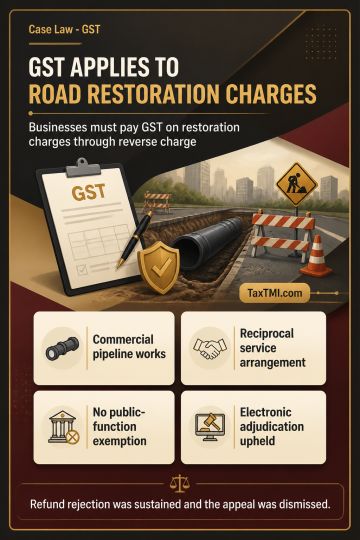
Road restoration charges for commercial pipeline works are taxable Government services, with reverse charge liability and no public-function exemption...
The HC dismissed the appeal challenging PMLA 2002 proceedings jurisdiction. Appellants argued that offences committed between June 2005-2007 preceded the Act's June 2009 amendment, rendering proceedings invalid. The court held that appellants continued dealing with immovable properties and crime proceeds post-amendment, establishing jurisdiction. Regarding pecuniary limits, the court determined that proceedings under Section 2(1)(y) Clause (i) require no minimum value threshold. Additionally, the crime proceeds exceeding Rs. 5.24 crores surpassed both pre and post-amendment limits of Rs. 30 lakhs. The court clarified that pecuniary jurisdiction depends on fraud quantum rather than property values, and since alleged offences fall under Schedule Part-A rather than Part-B, pecuniary limitations are inapplicable.
The HC dismissed the appeal challenging PMLA 2002 proceedings jurisdiction. Appellants argued that offences committed between June 2005-2007 preceded the Act's June 2009 amendment, rendering proceedings invalid. The court held that appellants continued dealing with immovable properties and crime proceeds post-amendment, establishing jurisdiction. Regarding pecuniary limits, the court determined that proceedings under Section 2(1)(y) Clause (i) require no minimum value threshold. Additionally, the crime proceeds exceeding Rs. 5.24 crores surpassed both pre and post-amendment limits of Rs. 30 lakhs. The court clarified that pecuniary jurisdiction depends on fraud quantum rather than property values, and since alleged offences fall under Schedule Part-A rather than Part-B, pecuniary limitations are inapplicable.
Note: It is a system-generated summary and is for quick reference only.
 TaxTMI
  TaxTMI
 of 4918