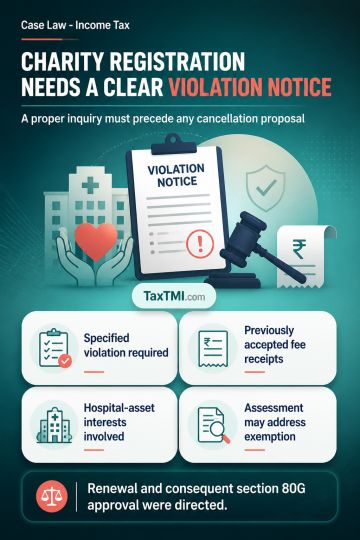
Charitable trust registration requires a specified-violation notice; settled cash deposits and related-party payments did not justify cancellation or ...
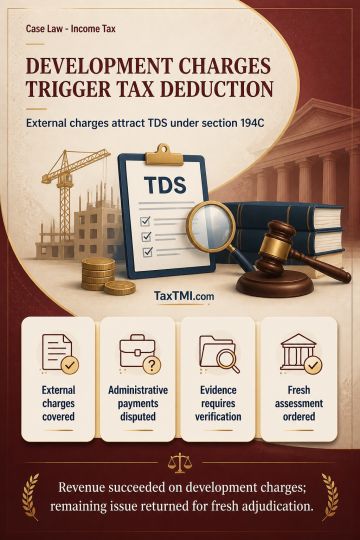
External development charges trigger TDS under section 194C, while disputed administrative payments require factual verification and fresh adjudicatio...
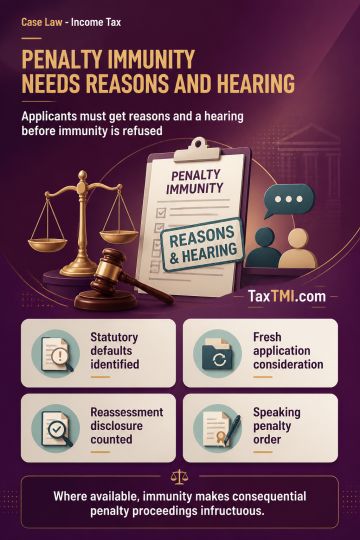
Section 270AA penalty immunity requires identified statutory defaults and a hearing before rejection; reassessment disclosure may constitute under-rep...
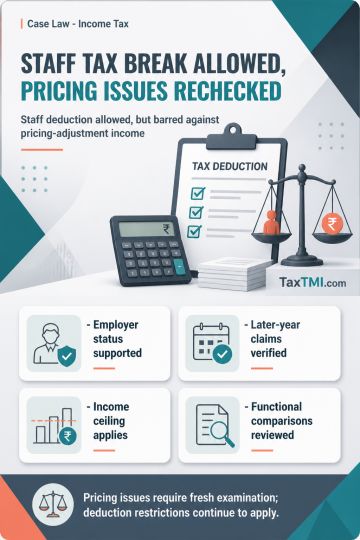
Section 80JJAA employee-cost deduction allowed for deployed staff but barred against transfer-pricing income enhancement, with pricing issues remanded...
Transfer-pricing methodology protects commercially genuine associated-enterprise payments, while pre-2016 secondary adjustments and related notional i...
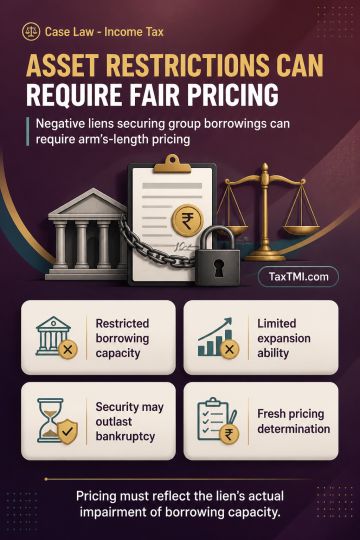
Negative liens over operating assets can constitute international transactions requiring arm's-length pricing reflecting restricted borrowing and expa...
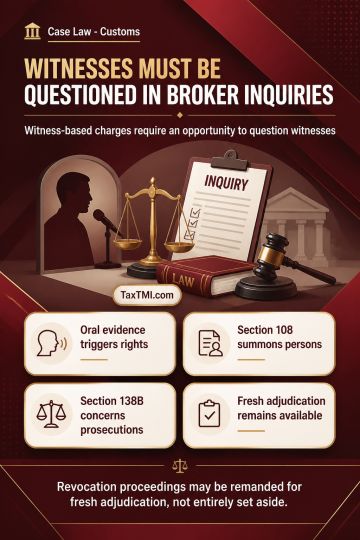
Cross-examination rights in Customs Broker revocation inquiries require witness examination; procedural denial may be cured through fresh adjudication...
The HC quashed SEBI's revocation order of a settlement agreement involving entities accused of misrepresenting promoter holdings and violating minimum public shareholding requirements under LODR Regulations. The court held that SEBI's one-line revocation order, passed fourteen months after the original settlement without providing reasons or opportunity of hearing, violated principles of natural justice, specifically audi alteram partem. Despite SEBI's contention that automatic revocation applied under Regulation 28 for non-compliance, the court found the regulator had continued engaging with the petitioners for fourteen months, acknowledging their difficulties in compliance due to interim court orders. The non-speaking, unreasoned revocation order was deemed unsustainable and prejudicial. The matter was remanded to SEBI for reconsideration with mandatory opportunity of hearing and reasoned decision-making.
The HC quashed SEBI's revocation order of a settlement agreement involving entities accused of misrepresenting promoter holdings and violating minimum public shareholding requirements under LODR Regulations. The court held that SEBI's one-line revocation order, passed fourteen months after the original settlement without providing reasons or opportunity of hearing, violated principles of natural justice, specifically audi alteram partem. Despite SEBI's contention that automatic revocation applied under Regulation 28 for non-compliance, the court found the regulator had continued engaging with the petitioners for fourteen months, acknowledging their difficulties in compliance due to interim court orders. The non-speaking, unreasoned revocation order was deemed unsustainable and prejudicial. The matter was remanded to SEBI for reconsideration with mandatory opportunity of hearing and reasoned decision-making.
Note: It is a system-generated summary and is for quick reference only.
 TaxTMI
  TaxTMI
 of 4828
















 Join Channel


