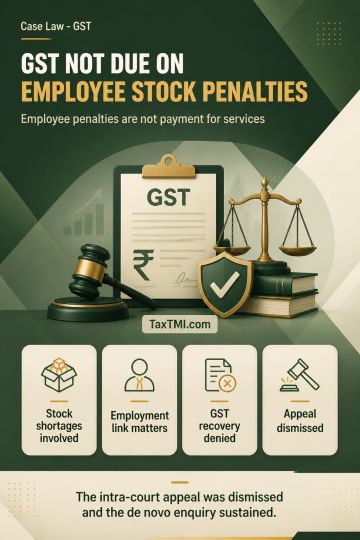
Employee stock-shortage penalties do not constitute consideration for services, preventing GST collection under Schedule II in employment relationship...
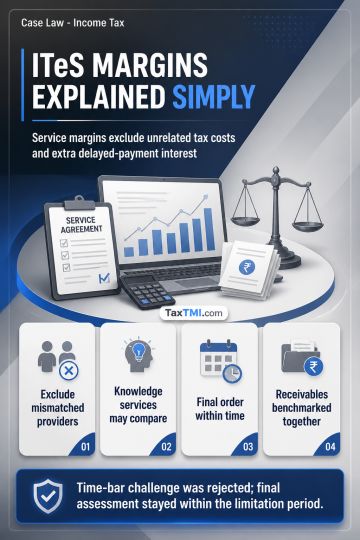
Transfer-pricing treatment of ITeS margins excludes pass-through tax recoveries and separate delayed-receivables interest after working-capital adjust...
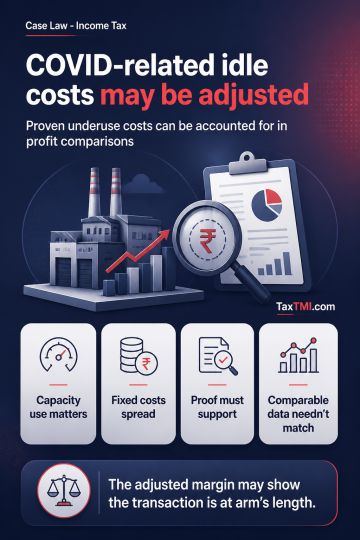
Capacity-utilisation adjustments under TNMM can neutralise substantiated COVID-related idle costs where underutilisation materially affects profitabil...
Page of 4830
Press 'Enter' after typing page number.
181 to 200 of 96587 Results
❮
❯
❯❯
0 / 200
Expand Note
Add to Folder
No Folders have been created
+
Are you sure you want to delete "My most important" ?
The HC dismissed an application seeking leave to appeal against acquittal under Section 138 of the Negotiable Instruments Act, 1881. The accused had issued three cheques totaling Rs. 7,50,000/- which were dishonored for insufficient funds. The complainant alleged the accused borrowed Rs. 15,00,000/- but failed to prove the debt's existence or his financial capacity to advance such amount. During cross-examination, the accused successfully rebutted the statutory presumption under Section 139, establishing that cheques were forcibly obtained and producing evidence of criminal complaints filed against the complainant for threats and harassment, including a suicide attempt. The Trial Court correctly concluded the complainant failed to prove the legally enforceable debt beyond reasonable doubt, warranting acquittal.
The HC dismissed an application seeking leave to appeal against acquittal under Section 138 of the Negotiable Instruments Act, 1881. The accused had issued three cheques totaling Rs. 7,50,000/- which were dishonored for insufficient funds. The complainant alleged the accused borrowed Rs. 15,00,000/- but failed to prove the debt's existence or his financial capacity to advance such amount. During cross-examination, the accused successfully rebutted the statutory presumption under Section 139, establishing that cheques were forcibly obtained and producing evidence of criminal complaints filed against the complainant for threats and harassment, including a suicide attempt. The Trial Court correctly concluded the complainant failed to prove the legally enforceable debt beyond reasonable doubt, warranting acquittal.
Note: It is a system-generated summary and is for quick reference only.
 TaxTMI
  TaxTMI
 of 4830



 Join Channel


