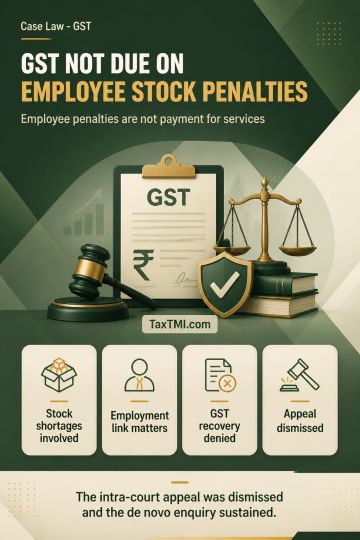
Employee stock-shortage penalties do not constitute consideration for services, preventing GST collection under Schedule II in employment relationship...
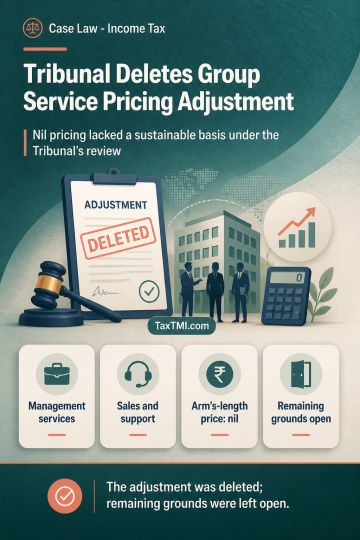
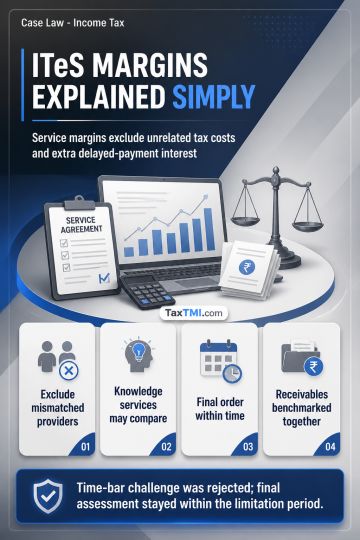
Transfer-pricing treatment of ITeS margins excludes pass-through tax recoveries and separate delayed-receivables interest after working-capital adjust...
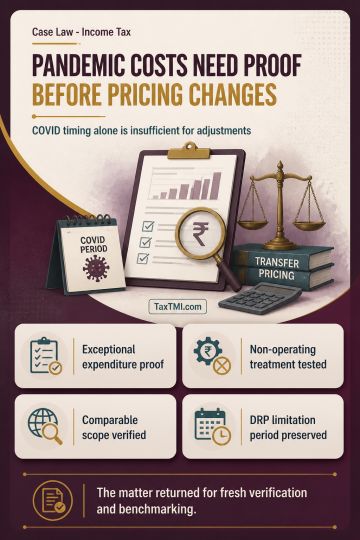
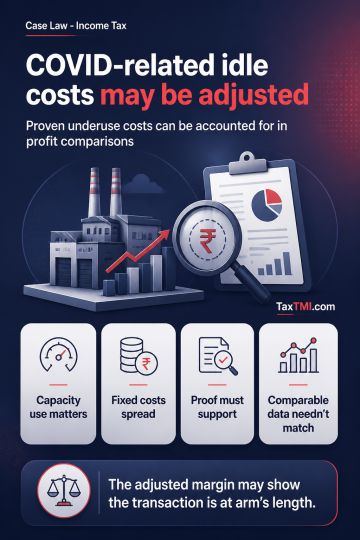
Capacity-utilisation adjustments under TNMM can neutralise substantiated COVID-related idle costs where underutilisation materially affects profitabil...
Page of 4830
Press 'Enter' after typing page number.
181 to 200 of 96587 Results
❮
❯
❯❯
0 / 200
Expand Note
Add to Folder
No Folders have been created
+
Are you sure you want to delete "My most important" ?
The Commissioner of Customs NS-II, JNCH issued Public Notice No. 44/2025 implementing Export Entry (Post export conversion in relation to instrument-based scheme) Regulations, 2025, superseding the 2022 regulations. The new regulations establish electronic processing for post-export amendments under Section 149 of the Customs Act, 1962, requiring Additional or Joint Commissioner approval for sensitive field modifications including port of loading, country of final destination, port of discharge, AD code, invoice value, HS code, goods description, and quantity. A one-year time limit applies for conversion applications from clearance date, with specific transitional provisions for entries cleared before and after implementation dates. Exporters must satisfy prescribed conditions including scheme compliance, benefit reversal, and absence of contraventions, submitting complete applications with supporting documentation to avoid deficiency memos.
The Commissioner of Customs NS-II, JNCH issued Public Notice No. 44/2025 implementing Export Entry (Post export conversion in relation to instrument-based scheme) Regulations, 2025, superseding the 2022 regulations. The new regulations establish electronic processing for post-export amendments under Section 149 of the Customs Act, 1962, requiring Additional or Joint Commissioner approval for sensitive field modifications including port of loading, country of final destination, port of discharge, AD code, invoice value, HS code, goods description, and quantity. A one-year time limit applies for conversion applications from clearance date, with specific transitional provisions for entries cleared before and after implementation dates. Exporters must satisfy prescribed conditions including scheme compliance, benefit reversal, and absence of contraventions, submitting complete applications with supporting documentation to avoid deficiency memos.
Note: It is a system-generated summary and is for quick reference only.
 TaxTMI
  TaxTMI
 of 4830





 Join Channel


