Transaction value cannot be rejected solely on non-statutory valuation guidelines without corroborative evidence supporting reassessment of final cust...
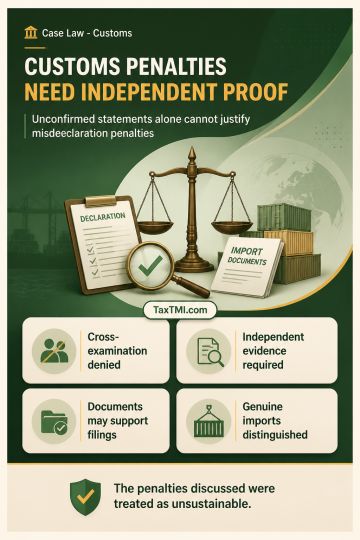
Cross-examination rights and corroborated evidence limit customs penalties for misdeclaration in genuine import transactions involving documented clea...
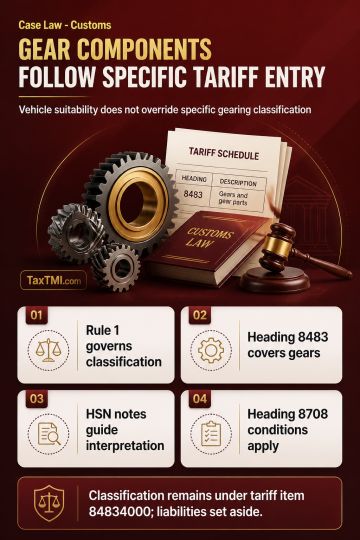
Tariff classification of vehicle gear components follows the specific gearing entry, displacing motor-vehicle parts classification and related liabili...
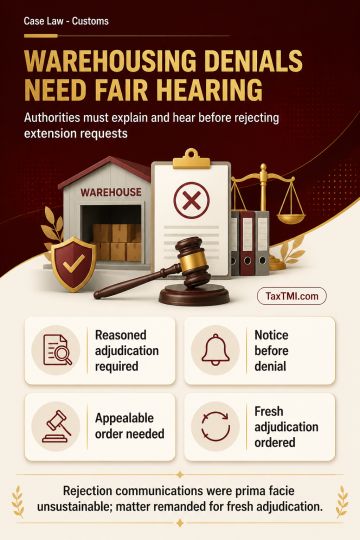
Necessary-party requirements limit impleadment of independent entities, while deferred consideration does not create an appealable adverse determinati...
Food supplement classification requires common parlance and authoritative tests, preventing treatment as proprietary Ayurvedic medicines without suppo...
HC set aside ex-parte assessment order for violating principles of natural justice due to improper service of show cause notice. Petitioner was unaware of notice uploaded only on GST Portal without physical service or alternative delivery methods under Section 169(1) of GST Act. Court held that merely fulfilling empty formalities through ex-parte proceedings without affording personal hearing opportunity defeats statutory purpose and creates multiplicity of litigation. Officer failed to explore prescribed alternative service modes including RPAD when initial notice method proved ineffective. Matter remanded to first respondent for fresh consideration with proper notice service, ensuring petitioner receives adequate hearing opportunity before assessment determination.
HC set aside ex-parte assessment order for violating principles of natural justice due to improper service of show cause notice. Petitioner was unaware of notice uploaded only on GST Portal without physical service or alternative delivery methods under Section 169(1) of GST Act. Court held that merely fulfilling empty formalities through ex-parte proceedings without affording personal hearing opportunity defeats statutory purpose and creates multiplicity of litigation. Officer failed to explore prescribed alternative service modes including RPAD when initial notice method proved ineffective. Matter remanded to first respondent for fresh consideration with proper notice service, ensuring petitioner receives adequate hearing opportunity before assessment determination.
Note: It is a system-generated summary and is for quick reference only.
 TaxTMI
 of 4800




















 Join Channel


 TaxTMI
