GST refunds for cancelled air tickets remain available when passenger reimbursements defeat unjust enrichment and credit-note adjustment is unavailabl...
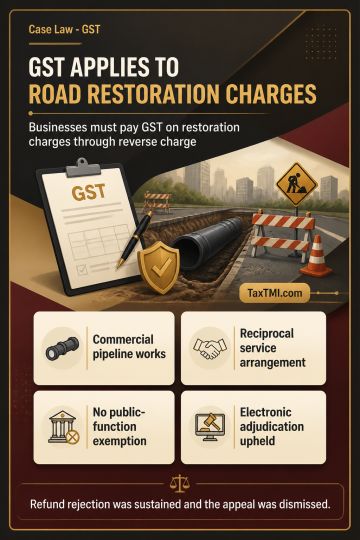
Request-driven road restoration attracts reverse-charge GST, not governmental-function treatment or compensatory-damages status for business recipient...
Road restoration charges for commercial pipeline works are taxable Government services, with reverse charge liability and no public-function exemption...
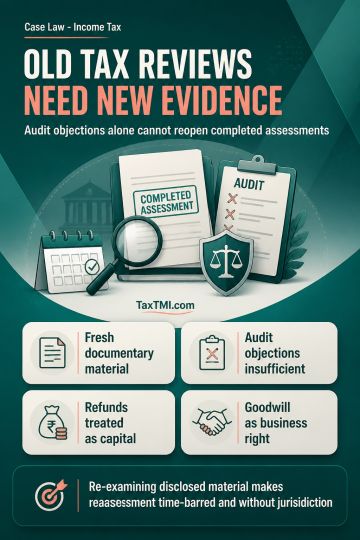
ITAT dismissed revenue's appeal challenging CIT(A)'s order that rejected rectification proceedings under section 154 regarding MEIS subsidy classification. The tribunal held that determining whether MEIS subsidy constitutes capital or revenue receipt involves complex interpretational issues requiring examination of scheme objectives, nature of rewards, and grant purposes. Relying on Volkart Brothers, ITAT ruled that section 154 rectification applies only to obvious and patent mistakes apparent from record, not matters requiring lengthy reasoning processes where multiple opinions may exist. The capital versus revenue receipt controversy represents one of taxation's most contentious issues, placing it beyond section 154's scope. ITAT affirmed that AO erroneously invoked rectification provisions on debatable matter, upholding CIT(A)'s decision against revenue department.
ITAT dismissed revenue's appeal challenging CIT(A)'s order that rejected rectification proceedings under section 154 regarding MEIS subsidy classification. The tribunal held that determining whether MEIS subsidy constitutes capital or revenue receipt involves complex interpretational issues requiring examination of scheme objectives, nature of rewards, and grant purposes. Relying on Volkart Brothers, ITAT ruled that section 154 rectification applies only to obvious and patent mistakes apparent from record, not matters requiring lengthy reasoning processes where multiple opinions may exist. The capital versus revenue receipt controversy represents one of taxation's most contentious issues, placing it beyond section 154's scope. ITAT affirmed that AO erroneously invoked rectification provisions on debatable matter, upholding CIT(A)'s decision against revenue department.
Note: It is a system-generated summary and is for quick reference only.
 TaxTMI
  TaxTMI
 of 4920