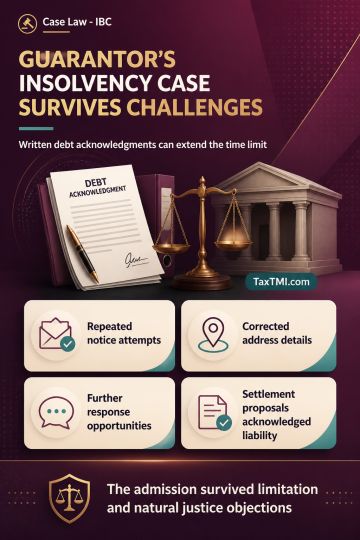
Service of notice and contractual debt acknowledgment preserved insolvency admission against a corporate guarantor despite limitation and natural just...
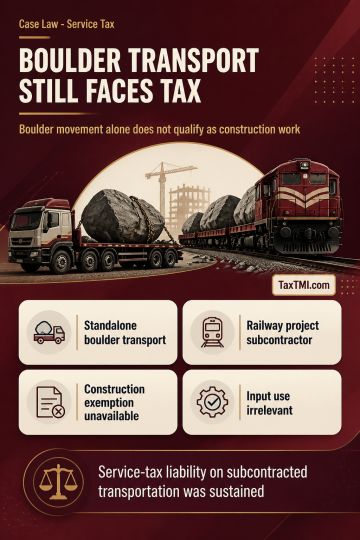
Original works exemption excludes standalone boulder transportation, leaving subcontracted railway-project transport services subject to service tax l...
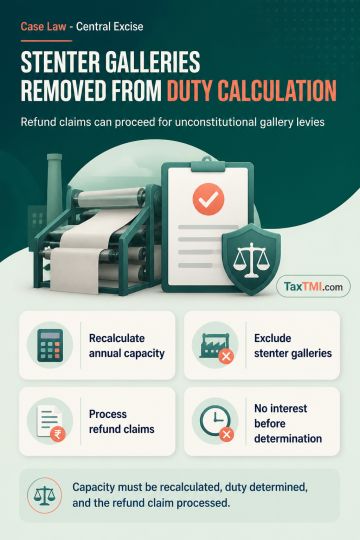
Annual production capacity determinations excluding stenter galleries support refunds for unconstitutional excise levies without an unjust-enrichment ...
Vicarious liability for cheque dishonour requires specific allegations of responsibility and cheque signatory; generic director allegations cannot sus...
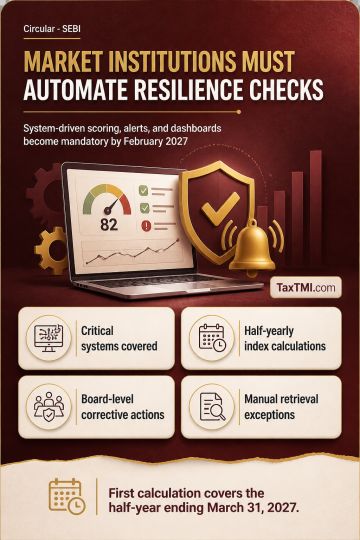
IT Resilience Index requires market infrastructure institutions to automate resilience scoring, early warnings, and continuous service-delivery monito...
ITAT upheld disallowance under Section 40A(3) against a private limited construction company for cash payments exceeding statutory limits in land purchases. The tribunal rejected the assessee's contention that genuine transactions are exempt from Section 40A(3), emphasizing that the provision applies to otherwise legitimate expenses paid in cash beyond prescribed thresholds. The court distinguished the Achal Alloy precedent, noting it involved business exigency with illiterate payees lacking bank accounts. The tribunal dismissed arguments that no expenditure was incurred merely because purchased land remained in closing stock, holding that debiting purchases to profit and loss account constituted sufficient expenditure recognition. The decision favored revenue authorities, confirming that Section 40A(3) operates independently of transaction genuineness when cash payment limits are exceeded.
ITAT upheld disallowance under Section 40A(3) against a private limited construction company for cash payments exceeding statutory limits in land purchases. The tribunal rejected the assessee's contention that genuine transactions are exempt from Section 40A(3), emphasizing that the provision applies to otherwise legitimate expenses paid in cash beyond prescribed thresholds. The court distinguished the Achal Alloy precedent, noting it involved business exigency with illiterate payees lacking bank accounts. The tribunal dismissed arguments that no expenditure was incurred merely because purchased land remained in closing stock, holding that debiting purchases to profit and loss account constituted sufficient expenditure recognition. The decision favored revenue authorities, confirming that Section 40A(3) operates independently of transaction genuineness when cash payment limits are exceeded.
Note: It is a system-generated summary and is for quick reference only.
 TaxTMI
  TaxTMI
 of 4828













 Join Channel