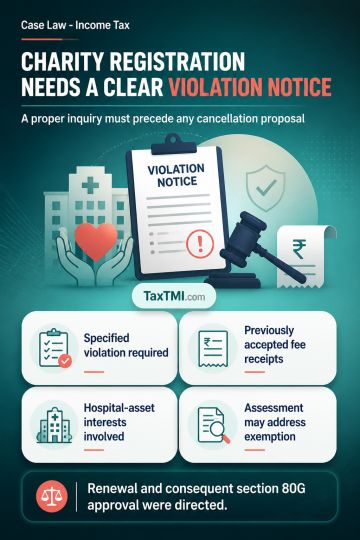
Charitable trust registration requires a specified-violation notice; settled cash deposits and related-party payments did not justify cancellation or ...
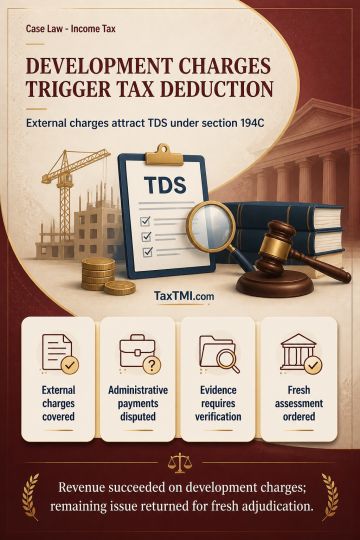
External development charges trigger TDS under section 194C, while disputed administrative payments require factual verification and fresh adjudicatio...
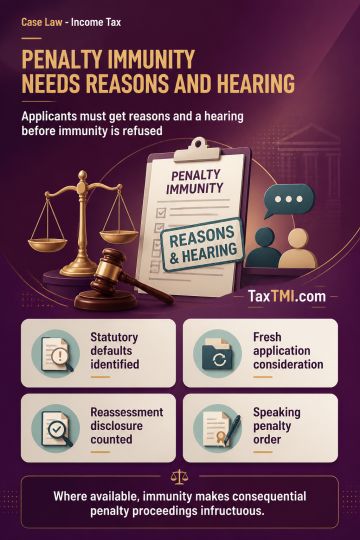
Section 270AA penalty immunity requires identified statutory defaults and a hearing before rejection; reassessment disclosure may constitute under-rep...
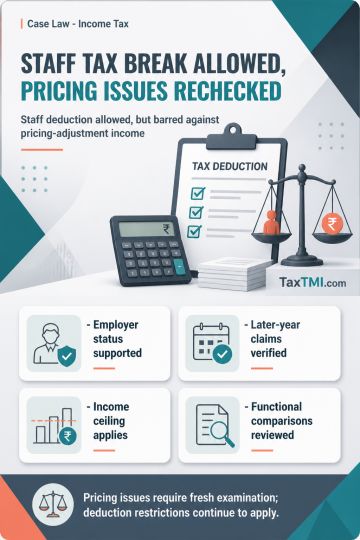
Section 80JJAA employee-cost deduction allowed for deployed staff but barred against transfer-pricing income enhancement, with pricing issues remanded...
Transfer-pricing methodology protects commercially genuine associated-enterprise payments, while pre-2016 secondary adjustments and related notional i...
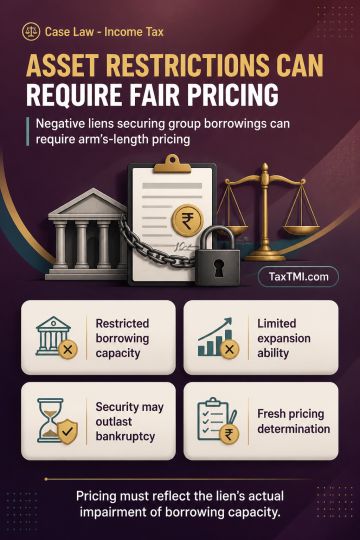
Negative liens over operating assets can constitute international transactions requiring arm's-length pricing reflecting restricted borrowing and expa...
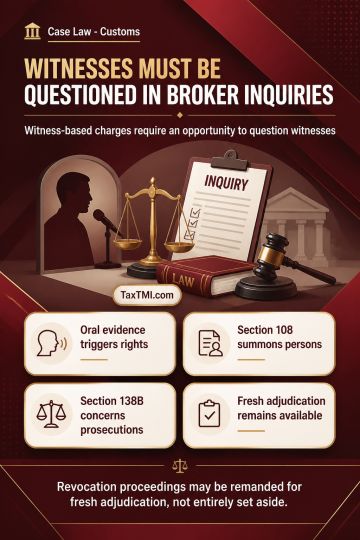
Cross-examination rights in Customs Broker revocation inquiries require witness examination; procedural denial may be cured through fresh adjudication...
The HC held that assessment orders issued beyond the statutory time limit prescribed under Section 144C(13) of the Income Tax Act are invalid and void. The court emphasized that when the legislature incorporates amendments to existing legislation, such amendments must be interpreted purposively while considering the overall statutory scheme. The court noted that amended provisions become integral parts of the statute and cannot be interpreted in isolation from other statutory provisions. Following precedents from Kerala HC in Allianz Cornhill Information Services case and Bombay HC in Vodafone Idea Limited case, the court ruled that the Assessing Officer is statutorily bound to adhere to the time limits stipulated under Section 144C(13). Any assessment order issued in breach of these mandatory time limits shall be deemed invalid. The writ petition was allowed, affirming the strict adherence to procedural timelines in tax assessment proceedings.
The HC held that assessment orders issued beyond the statutory time limit prescribed under Section 144C(13) of the Income Tax Act are invalid and void. The court emphasized that when the legislature incorporates amendments to existing legislation, such amendments must be interpreted purposively while considering the overall statutory scheme. The court noted that amended provisions become integral parts of the statute and cannot be interpreted in isolation from other statutory provisions. Following precedents from Kerala HC in Allianz Cornhill Information Services case and Bombay HC in Vodafone Idea Limited case, the court ruled that the Assessing Officer is statutorily bound to adhere to the time limits stipulated under Section 144C(13). Any assessment order issued in breach of these mandatory time limits shall be deemed invalid. The writ petition was allowed, affirming the strict adherence to procedural timelines in tax assessment proceedings.
Note: It is a system-generated summary and is for quick reference only.
 TaxTMI
  TaxTMI
 of 4828













 Join Channel


