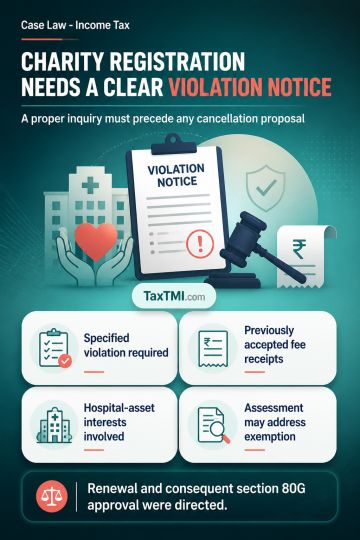
Charitable trust registration requires a specified-violation notice; settled cash deposits and related-party payments did not justify cancellation or ...
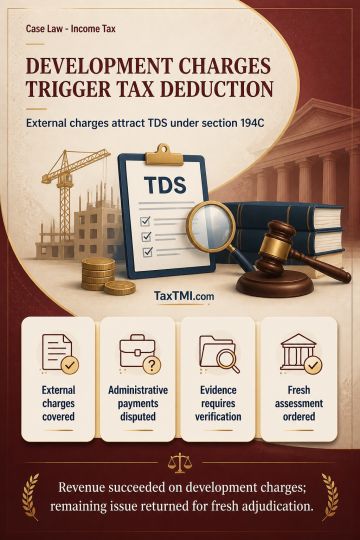
External development charges trigger TDS under section 194C, while disputed administrative payments require factual verification and fresh adjudicatio...
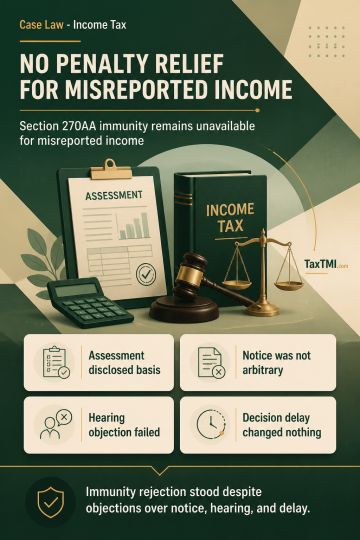
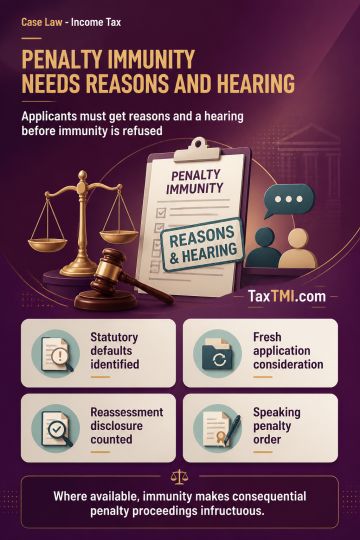
Section 270AA penalty immunity requires identified statutory defaults and a hearing before rejection; reassessment disclosure may constitute under-rep...
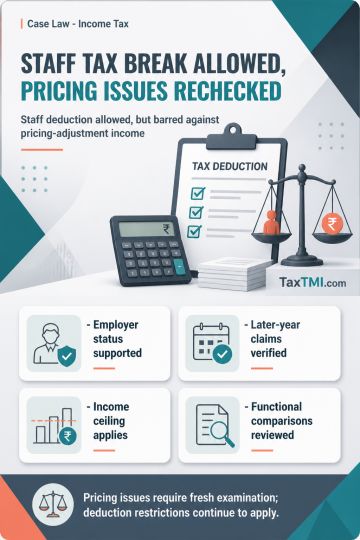
Section 80JJAA employee-cost deduction allowed for deployed staff but barred against transfer-pricing income enhancement, with pricing issues remanded...
Page of 4830
Press 'Enter' after typing page number.
141 to 160 of 96587 Results
❮
❯
❯❯
0 / 200
Expand Note
Add to Folder
No Folders have been created
+
Are you sure you want to delete "My most important" ?
ITAT allowed appellant's appeal regarding disallowance of advance written-off as bad debt. Tribunal held that even if advance write-off was not allowable as bad debt under relevant provisions, it qualified as allowable business loss under Section 37(1) or Section 28(1) of the Act. The advance was made for business expediency in ordinary course of business and constituted genuine transaction, not sham or accommodation entry. Assessing Officer failed to establish cogent reasons for disallowance despite burden being on revenue authority. Tribunal also allowed deduction of prior period expenses including insurance premium and service charges, following precedent where revenue could not disprove crystallization of liability during relevant assessment year. Both grounds of appeal were allowed in favor of appellant.
ITAT allowed appellant's appeal regarding disallowance of advance written-off as bad debt. Tribunal held that even if advance write-off was not allowable as bad debt under relevant provisions, it qualified as allowable business loss under Section 37(1) or Section 28(1) of the Act. The advance was made for business expediency in ordinary course of business and constituted genuine transaction, not sham or accommodation entry. Assessing Officer failed to establish cogent reasons for disallowance despite burden being on revenue authority. Tribunal also allowed deduction of prior period expenses including insurance premium and service charges, following precedent where revenue could not disprove crystallization of liability during relevant assessment year. Both grounds of appeal were allowed in favor of appellant.
Note: It is a system-generated summary and is for quick reference only.
 TaxTMI
  TaxTMI
 of 4830








 Join Channel


