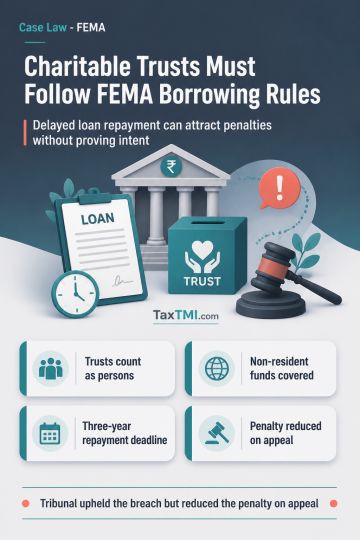
FEMA borrowing restrictions bind charitable trusts, and civil penalties apply without proving intent for delayed repayment of non-resident rupee loans...
In a ruling by AAR, a pharmaceutical goods importer operating through a Free Trade Warehousing Zone (FTWZ) in Tamil Nadu was found not obligated to obtain a separate GST registration in the state. The decision hinged on the interpretation that sales of goods within FTWZ before home consumption clearance do not constitute a taxable supply. The warehousing activities, deemed to be in a customs-bonded area outside India's customs territory, do not trigger GST registration requirements. The applicant's existing registration in Telengana was deemed sufficient to manage potential tax compliances arising from future goods clearance into the domestic tariff area.
In a ruling by AAR, a pharmaceutical goods importer operating through a Free Trade Warehousing Zone (FTWZ) in Tamil Nadu was found not obligated to obtain a separate GST registration in the state. The decision hinged on the interpretation that sales of goods within FTWZ before home consumption clearance do not constitute a taxable supply. The warehousing activities, deemed to be in a customs-bonded area outside India's customs territory, do not trigger GST registration requirements. The applicant's existing registration in Telengana was deemed sufficient to manage potential tax compliances arising from future goods clearance into the domestic tariff area.
Note: It is a system-generated summary and is for quick reference only.
 TaxTMI
  TaxTMI
 of 4888