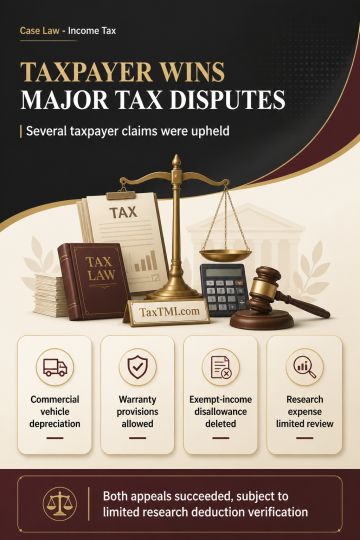
Commercial vehicle depreciation, scientifically determined warranty provisions and exempt-income disallowances were resolved in favour of the taxpayer...
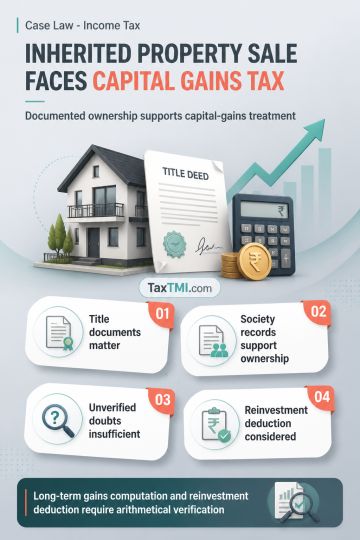
Inherited property sale proceeds require capital-gains treatment where ownership is supported by evidence, not suspicion or unverified signature doubt...
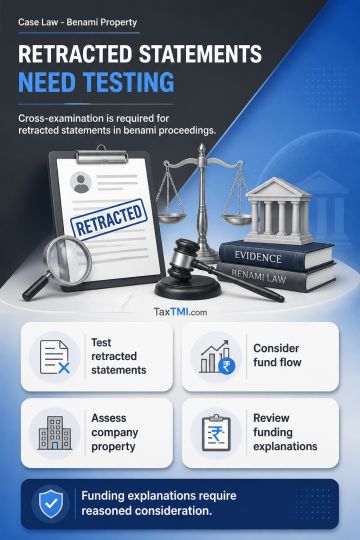
Cross-examination of retracted statements is essential where foundational evidence supports a benami allegation and documented funding explanations re...
Capital-goods exemption covers plant-modernisation accessories, while the import restriction applies only to earlier capital-goods components and spar...
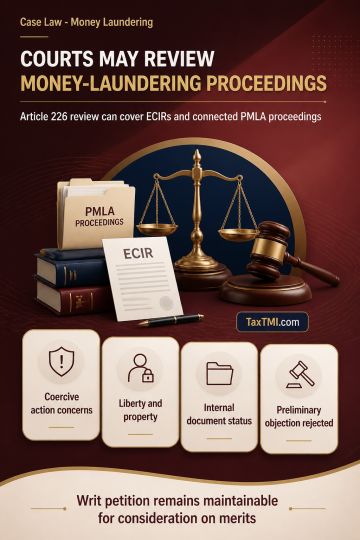
Constitutional judicial review permits challenges to ECIRs and connected money-laundering proceedings where coercive action affects fundamental intere...
HC ruled that the petitioner may discharge outstanding tax liabilities pursuant to Circular No. 238/32/2024 GST dated 15th October, 2024. The court directed the tax authority to accept all dues, including taxes, interest, penalties, and charges as per the demand notice. Since the petitioner failed to deposit taxes during the Covid-19 period and did not contest the department's counter affidavit, the court held that the petitioner can voluntarily settle the tax liability by making appropriate deposits, which the department must accept in accordance with applicable legal provisions.
HC ruled that the petitioner may discharge outstanding tax liabilities pursuant to Circular No. 238/32/2024 GST dated 15th October, 2024. The court directed the tax authority to accept all dues, including taxes, interest, penalties, and charges as per the demand notice. Since the petitioner failed to deposit taxes during the Covid-19 period and did not contest the department's counter affidavit, the court held that the petitioner can voluntarily settle the tax liability by making appropriate deposits, which the department must accept in accordance with applicable legal provisions.
Note: It is a system-generated summary and is for quick reference only.
 TaxTMI
 of 4798






 Join Channel


 TaxTMI
