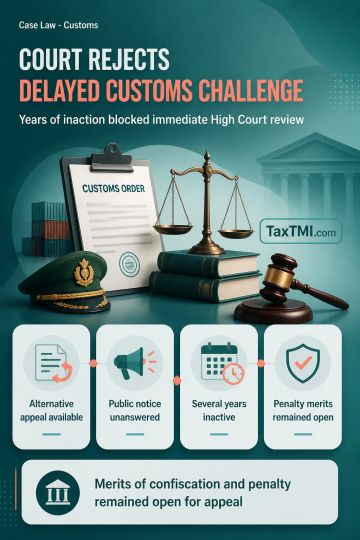
Alternative statutory remedy and unexplained delay barred writ review of customs confiscation adjudication, leaving merits for appellate consideration...
Authorised courier due diligence protects against penalties where declared exports conceal prohibited goods despite proper documentation and customs p...
Customs-controlled container movement now extends to DP World facilities, subject to segregation, inspections, reconciliation, and EXIM cargo priority...
The ITAT examined whether the PCIT could invoke jurisdiction under Section 263 when the AO had already raised specific queries, received detailed responses, and passed an order under Section 143(3). The tribunal held that where the AO conducted an inquiry and considered the assessee's submissions, it does not constitute a case of lack of inquiry but potentially an inadequate inquiry. Consequently, the PCIT cannot set aside the original assessment order. The tribunal set aside the PCIT's order and allowed the assessee's grounds, emphasizing that procedural scrutiny does not automatically justify revisional jurisdiction when substantive examination has occurred.
The ITAT examined whether the PCIT could invoke jurisdiction under Section 263 when the AO had already raised specific queries, received detailed responses, and passed an order under Section 143(3). The tribunal held that where the AO conducted an inquiry and considered the assessee's submissions, it does not constitute a case of lack of inquiry but potentially an inadequate inquiry. Consequently, the PCIT cannot set aside the original assessment order. The tribunal set aside the PCIT's order and allowed the assessee's grounds, emphasizing that procedural scrutiny does not automatically justify revisional jurisdiction when substantive examination has occurred.
Note: It is a system-generated summary and is for quick reference only.
 TaxTMI
  TaxTMI
 of 4828















 Join Channel


