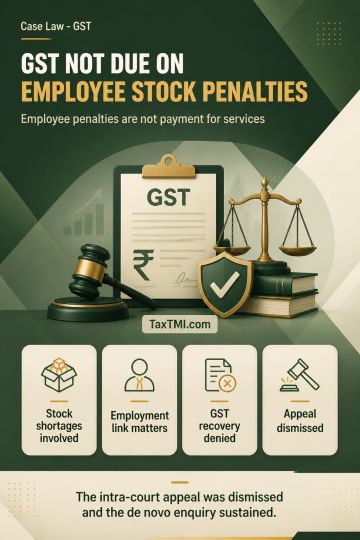
Employee stock-shortage penalties do not constitute consideration for services, preventing GST collection under Schedule II in employment relationship...
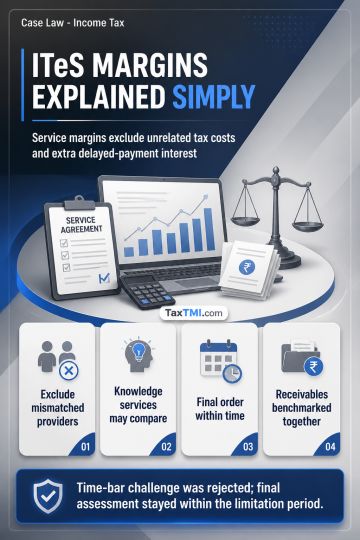
Transfer-pricing treatment of ITeS margins excludes pass-through tax recoveries and separate delayed-receivables interest after working-capital adjust...
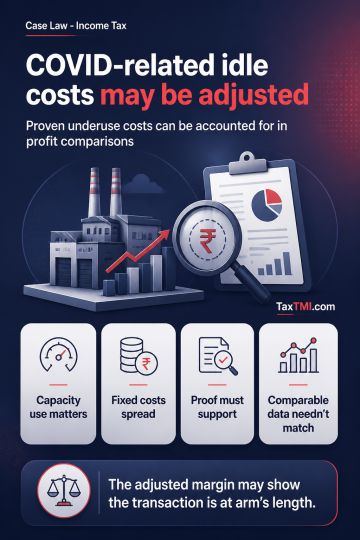
Capacity-utilisation adjustments under TNMM can neutralise substantiated COVID-related idle costs where underutilisation materially affects profitabil...
Page of 4830
Press 'Enter' after typing page number.
181 to 200 of 96587 Results
❮
❯
❯❯
0 / 200
Expand Note
Add to Folder
No Folders have been created
+
Are you sure you want to delete "My most important" ?
The ITAT examined whether the PCIT could invoke jurisdiction under Section 263 when the AO had already raised specific queries, received detailed responses, and passed an order under Section 143(3). The tribunal held that where the AO conducted an inquiry and considered the assessee's submissions, it does not constitute a case of lack of inquiry but potentially an inadequate inquiry. Consequently, the PCIT cannot set aside the original assessment order. The tribunal set aside the PCIT's order and allowed the assessee's grounds, emphasizing that procedural scrutiny does not automatically justify revisional jurisdiction when substantive examination has occurred.
The ITAT examined whether the PCIT could invoke jurisdiction under Section 263 when the AO had already raised specific queries, received detailed responses, and passed an order under Section 143(3). The tribunal held that where the AO conducted an inquiry and considered the assessee's submissions, it does not constitute a case of lack of inquiry but potentially an inadequate inquiry. Consequently, the PCIT cannot set aside the original assessment order. The tribunal set aside the PCIT's order and allowed the assessee's grounds, emphasizing that procedural scrutiny does not automatically justify revisional jurisdiction when substantive examination has occurred.
Note: It is a system-generated summary and is for quick reference only.
 TaxTMI
  TaxTMI
 of 4830



 Join Channel


