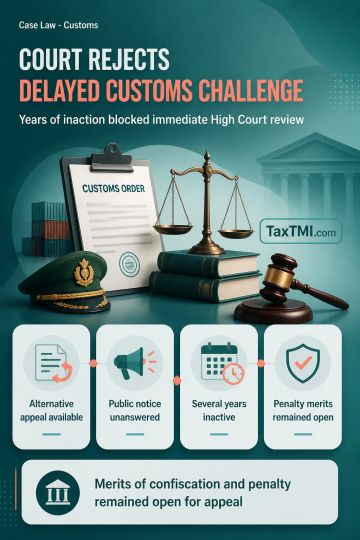
Alternative statutory remedy and unexplained delay barred writ review of customs confiscation adjudication, leaving merits for appellate consideration...
Authorised courier due diligence protects against penalties where declared exports conceal prohibited goods despite proper documentation and customs p...
Customs-controlled container movement now extends to DP World facilities, subject to segregation, inspections, reconciliation, and EXIM cargo priority...
SC interprets Sections 29(1) and 29(1A) of the Competition Act, 2002, clarifying the discretionary powers of the Competition Commission. The Court distinguishes between the mandatory nature of "shall" in Section 29(1) and the discretionary "may" in Section 29(1A), emphasizing the Commission's expert discretion in determining whether to initiate a detailed investigation after issuing a show cause notice. The judgment reaffirms that the Commission retains flexibility in deciding the investigative process, rejecting a rigid two-phase mechanism. The review petition challenging the majority judgment's interpretation is ultimately allowed, with the Court providing critical clarification on the statutory provisions' scope and application.
SC interprets Sections 29(1) and 29(1A) of the Competition Act, 2002, clarifying the discretionary powers of the Competition Commission. The Court distinguishes between the mandatory nature of "shall" in Section 29(1) and the discretionary "may" in Section 29(1A), emphasizing the Commission's expert discretion in determining whether to initiate a detailed investigation after issuing a show cause notice. The judgment reaffirms that the Commission retains flexibility in deciding the investigative process, rejecting a rigid two-phase mechanism. The review petition challenging the majority judgment's interpretation is ultimately allowed, with the Court providing critical clarification on the statutory provisions' scope and application.
Note: It is a system-generated summary and is for quick reference only.
 TaxTMI
  TaxTMI
 of 4827

















 Join Channel


