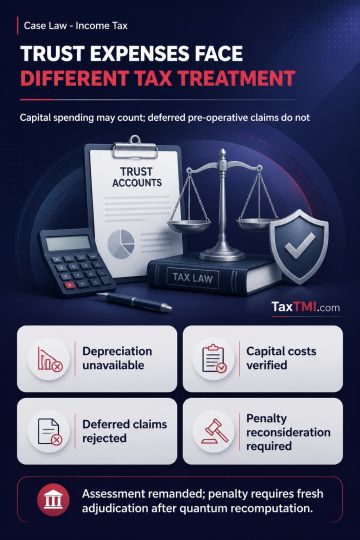
Charitable trust income application permits verified capital expenditure but rejects deferred pre-operative claims and requires reconsideration of con...
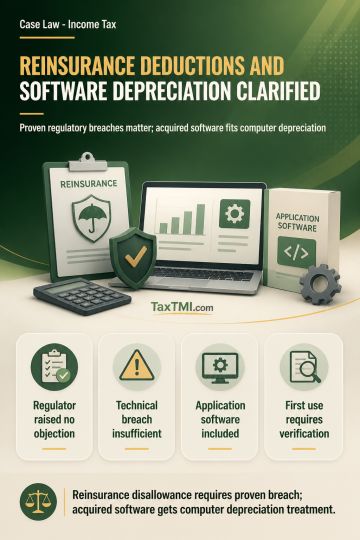
Reinsurance premium deductions require established regulatory breaches, while independently acquired software qualifies within the computer depreciati...
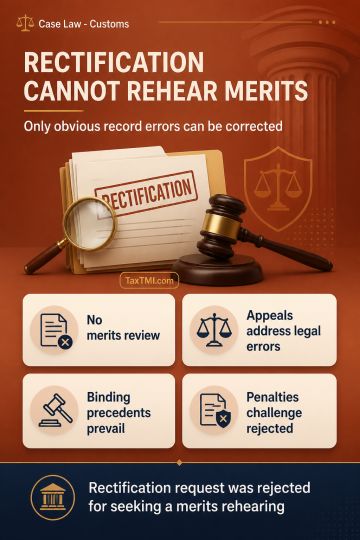
Rectification of mistake remains limited to self-evident record errors, preventing merits review through miscellaneous applications and preserving fin...
Tender creditworthiness conditions may extend to de facto Promoter Directors, with post-participation challenges generally barred absent arbitrariness...
Corporate representation in PMLA summons proceedings permitted through an authorised signatory, subject to directors' continuing cooperation and atten...
ITAT set aside CIT(Appeals)/NFAC's ex parte dismissal of assessee's appeal, holding that the appellate authority lacks power to summarily dismiss an appeal for non-prosecution. The tribunal mandated a de novo adjudication, requiring CIT(Appeals)/NFAC to examine the appeal's merits comprehensively under Section 251 of the Income Tax Act. The order directs the appellate authority to pass a reasoned order within three months, emphasizing the statutory obligation to apply judicial mind to all issues, while cautioning the assessee to comply with future hearing notices.
ITAT set aside CIT(Appeals)/NFAC's ex parte dismissal of assessee's appeal, holding that the appellate authority lacks power to summarily dismiss an appeal for non-prosecution. The tribunal mandated a de novo adjudication, requiring CIT(Appeals)/NFAC to examine the appeal's merits comprehensively under Section 251 of the Income Tax Act. The order directs the appellate authority to pass a reasoned order within three months, emphasizing the statutory obligation to apply judicial mind to all issues, while cautioning the assessee to comply with future hearing notices.
Note: It is a system-generated summary and is for quick reference only.
 TaxTMI
 of 4805


















 Join Channel


 TaxTMI
