Insolvency moratorium does not shield company officers from cheque dishonour prosecution for liability arising before corporate insolvency proceedings...
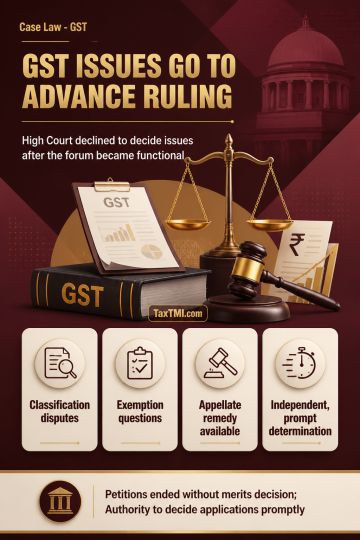
Advance-ruling mechanism governs pending GST classification, exemption and taxability disputes, limiting writ review once the specialised forum functi...
ITAT set aside CIT(Appeals)/NFAC's ex parte dismissal of assessee's appeal, holding that the appellate authority lacks power to summarily dismiss an appeal for non-prosecution. The tribunal mandated a de novo adjudication, requiring CIT(Appeals)/NFAC to examine the appeal's merits comprehensively under Section 251 of the Income Tax Act. The order directs the appellate authority to pass a reasoned order within three months, emphasizing the statutory obligation to apply judicial mind to all issues, while cautioning the assessee to comply with future hearing notices.
ITAT set aside CIT(Appeals)/NFAC's ex parte dismissal of assessee's appeal, holding that the appellate authority lacks power to summarily dismiss an appeal for non-prosecution. The tribunal mandated a de novo adjudication, requiring CIT(Appeals)/NFAC to examine the appeal's merits comprehensively under Section 251 of the Income Tax Act. The order directs the appellate authority to pass a reasoned order within three months, emphasizing the statutory obligation to apply judicial mind to all issues, while cautioning the assessee to comply with future hearing notices.
Note: It is a system-generated summary and is for quick reference only.
 TaxTMI
 of 4805














 Join Channel


 TaxTMI
