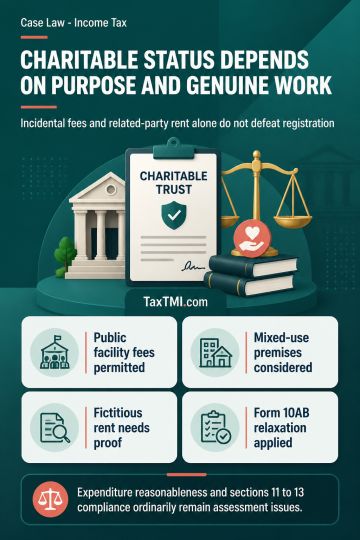
Charitable registration turns on predominant purpose and genuine activities, while incidental fees and related-party rent require supporting adverse m...
MAT book-profit adjustments exclude disallowances for exempt-income expenditure and demerger expenditure unless expressly listed under the statutory c...
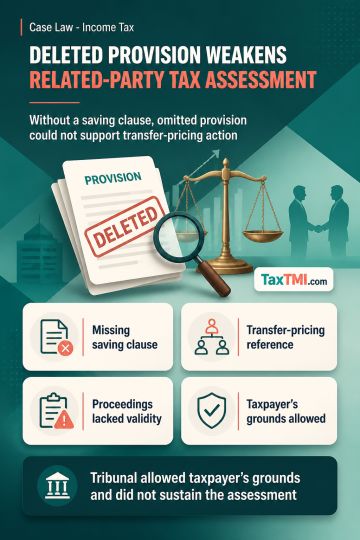
Omitted specified domestic transaction provision invalidates related-party expenditure transfer-pricing references and assessments based on consequent...
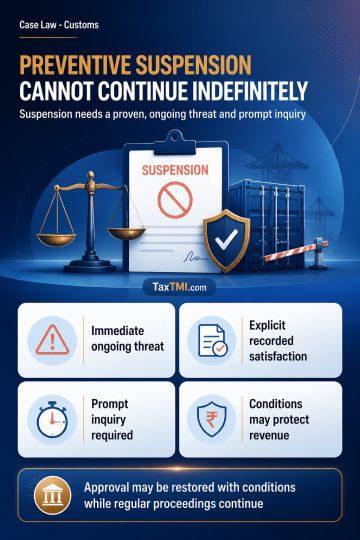
Preventive suspension requires an immediate continuing threat and cannot become indefinite without inquiry, fresh evidence, or proportionate safeguard...
Page of 4800
Press 'Enter' after typing page number.
261 to 280 of 96000 Results
❮
❯
❯❯
0 / 200
Expand Note
Add to Folder
No Folders have been created
+
Are you sure you want to delete "My most important" ?
ITAT held that penalty u/s 272A(1)(c) for non-compliance of summons is not sustainable. The tribunal found no substantive evidence of willful default by the assessee. First notice via email was disputed and not conclusively proven as served. Second notice involved a legitimate adjournment request. Third notice was also contested as unserved, with revenue not contradicting the claim. Fourth notice was fully complied with. Applying Section 273B, the tribunal determined reasonable cause existed for the alleged non-compliance. Consequently, the tribunal allowed the assessee's grounds and set aside the penalty proceedings, emphasizing procedural fairness and lack of deliberate contumacy.
ITAT held that penalty u/s 272A(1)(c) for non-compliance of summons is not sustainable. The tribunal found no substantive evidence of willful default by the assessee. First notice via email was disputed and not conclusively proven as served. Second notice involved a legitimate adjournment request. Third notice was also contested as unserved, with revenue not contradicting the claim. Fourth notice was fully complied with. Applying Section 273B, the tribunal determined reasonable cause existed for the alleged non-compliance. Consequently, the tribunal allowed the assessee's grounds and set aside the penalty proceedings, emphasizing procedural fairness and lack of deliberate contumacy.
Note: It is a system-generated summary and is for quick reference only.
 TaxTMI
 of 4800










 Join Channel


 TaxTMI