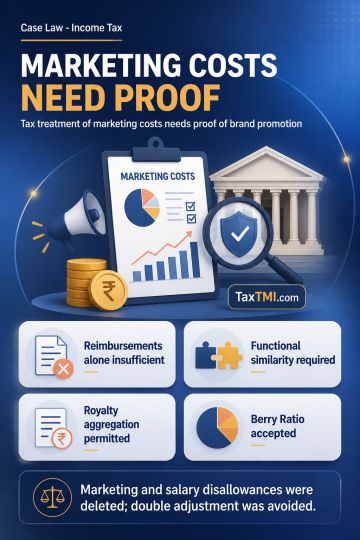
Transfer pricing requires evidence for AMP transactions, functionally reliable comparables, and appropriate aggregation or Berry Ratio benchmarking me...
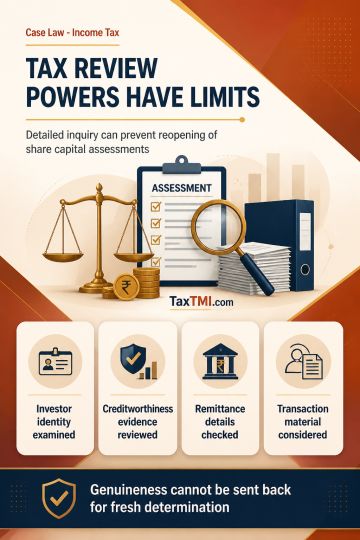
Revisionary jurisdiction cannot reopen share capital assessments where adequate inquiry supports a permissible view and no independent error is establ...
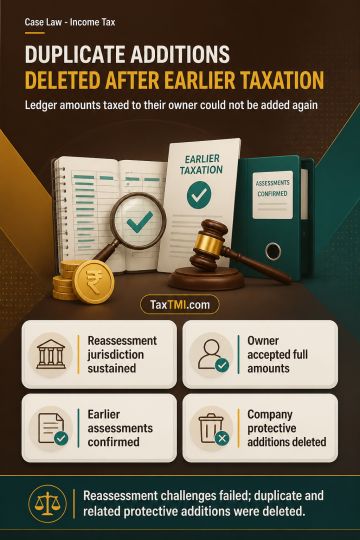
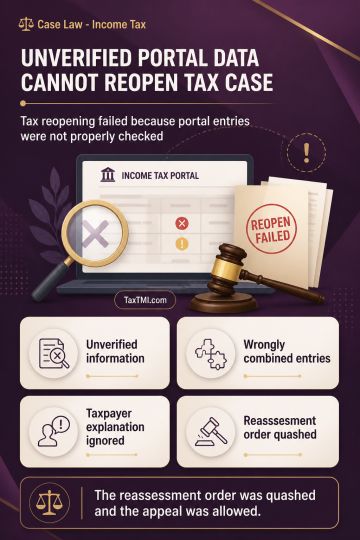
Reassessment jurisdiction fails where unverified portal information is aggregated without examining the taxpayer's explanation or relevance of entries...
Statutory sanction for delayed reassessment requires approval from the prescribed authority; approval by an inferior authority invalidates jurisdictio...
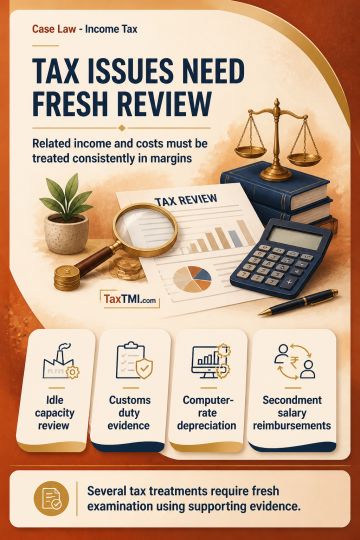
Transfer pricing margin adjustments require matching treatment of non-operating income and related costs, with comparability issues reconsidered on ev...
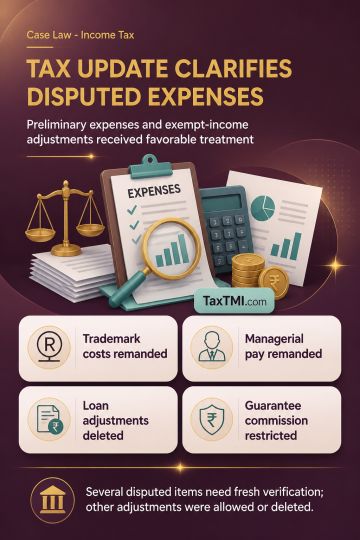
Preliminary-expense amortisation and MAT exempt-income adjustments prevailed, while trademark costs and managerial remuneration require fresh verifica...
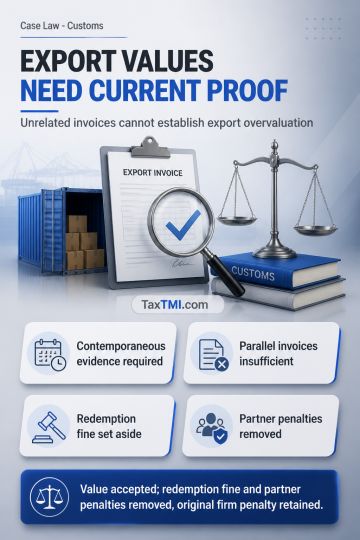
Export valuation requires contemporaneous evidence; unrelated invoices cannot prove overvaluation, and dual penalties on firm and partner are impermis...
Legal Circular Analysis: The circular addresses key interpretative issues regarding Section 128A of the Assam GST Act, 2017, specifically clarifying two critical points. First, taxpayers who paid taxes through GSTR-3B before 1st November 2024 remain eligible for benefits under Section 128A, subject to proper officer verification. Second, for notices/orders spanning periods partially covered and outside Section 128A, taxpayers can file specific forms (SPL-01/SPL-02) after paying tax liabilities for covered periods, with appellate authorities empowered to adjudicate remaining periods independently. The guidance aims to provide procedural clarity and administrative flexibility in tax dispute resolution, ensuring uniform implementation across tax jurisdictions.
Legal Circular Analysis: The circular addresses key interpretative issues regarding Section 128A of the Assam GST Act, 2017, specifically clarifying two critical points. First, taxpayers who paid taxes through GSTR-3B before 1st November 2024 remain eligible for benefits under Section 128A, subject to proper officer verification. Second, for notices/orders spanning periods partially covered and outside Section 128A, taxpayers can file specific forms (SPL-01/SPL-02) after paying tax liabilities for covered periods, with appellate authorities empowered to adjudicate remaining periods independently. The guidance aims to provide procedural clarity and administrative flexibility in tax dispute resolution, ensuring uniform implementation across tax jurisdictions.
Note: It is a system-generated summary and is for quick reference only.
 TaxTMI
 of 4800












 Join Channel


 TaxTMI
