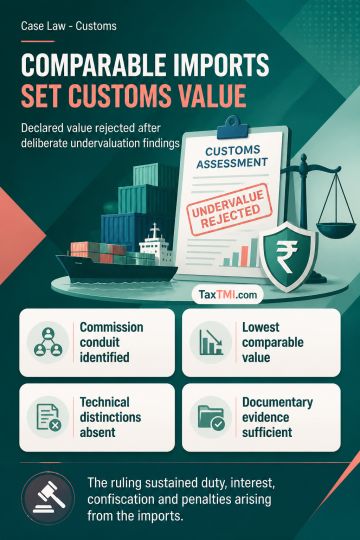
Transaction value rejection requires reliable corroboration; refundable VAT is excluded and temporary registration does not defeat new-vehicle exempti...
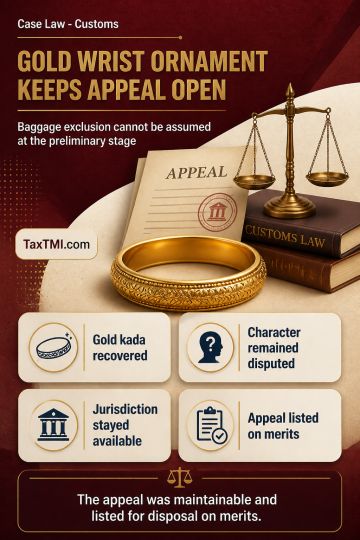
Appellate jurisdiction remains available where a wrist-worn gold ornament cannot conclusively be characterised as imported baggage at the preliminary ...
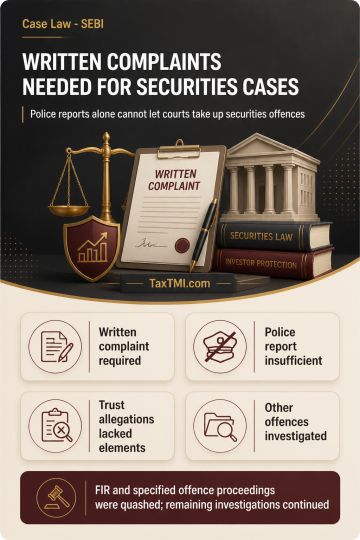
Written complaint requirement bars cognizance on police reports for securities offences, while unsupported breach of trust and cheating allegations fa...
Page of 4801
Press 'Enter' after typing page number.
341 to 360 of 96001 Results
❮
❯
❯❯
0 / 200
Expand Note
Add to Folder
No Folders have been created
+
Are you sure you want to delete "My most important" ?
Legal Circular Analysis: The circular addresses key interpretative issues regarding Section 128A of the Assam GST Act, 2017, specifically clarifying two critical points. First, taxpayers who paid taxes through GSTR-3B before 1st November 2024 remain eligible for benefits under Section 128A, subject to proper officer verification. Second, for notices/orders spanning periods partially covered and outside Section 128A, taxpayers can file specific forms (SPL-01/SPL-02) after paying tax liabilities for covered periods, with appellate authorities empowered to adjudicate remaining periods independently. The guidance aims to provide procedural clarity and administrative flexibility in tax dispute resolution, ensuring uniform implementation across tax jurisdictions.
Legal Circular Analysis: The circular addresses key interpretative issues regarding Section 128A of the Assam GST Act, 2017, specifically clarifying two critical points. First, taxpayers who paid taxes through GSTR-3B before 1st November 2024 remain eligible for benefits under Section 128A, subject to proper officer verification. Second, for notices/orders spanning periods partially covered and outside Section 128A, taxpayers can file specific forms (SPL-01/SPL-02) after paying tax liabilities for covered periods, with appellate authorities empowered to adjudicate remaining periods independently. The guidance aims to provide procedural clarity and administrative flexibility in tax dispute resolution, ensuring uniform implementation across tax jurisdictions.
Note: It is a system-generated summary and is for quick reference only.
 TaxTMI
 of 4801






 Join Channel


 TaxTMI