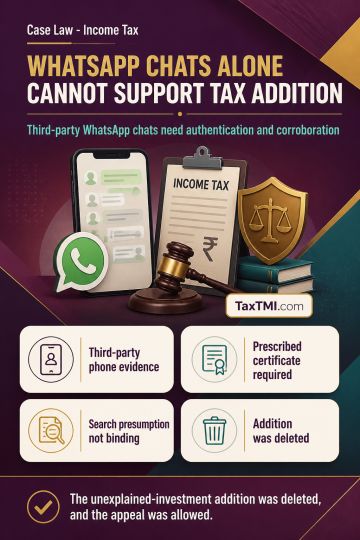
Electronic WhatsApp evidence without authentication or independent corroboration cannot sustain an unexplained-investment addition based on third-part...
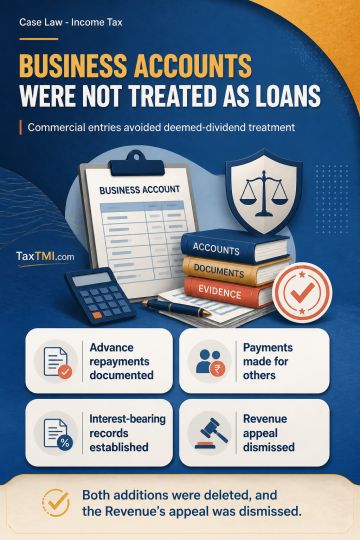
Mutual current-account transactions excluded from deemed dividend treatment where no fresh borrowing arose; unsupported unsecured-loan addition also f...
HC determined that supply affordable charges and electrification charges constitute distinct receipt categories. Service line receipts represent capital expenditure for infrastructure development, recovered as one-time charges for laying transmission lines and acquiring plant machinery. These charges are fundamentally different from energy consumption charges. Energy charges, recovered at prevailing tariff rates, represent revenue receipts for actual electricity consumption. The judicial review affirmed the CIT(A) and ITAT's classification, recognizing the divergent characteristics of these receipts and aligning with established regulatory frameworks under M.P. Electricity Act, 2003. The ruling effectively distinguishes between capital and revenue receipt classifications in utility service contexts.
HC determined that supply affordable charges and electrification charges constitute distinct receipt categories. Service line receipts represent capital expenditure for infrastructure development, recovered as one-time charges for laying transmission lines and acquiring plant machinery. These charges are fundamentally different from energy consumption charges. Energy charges, recovered at prevailing tariff rates, represent revenue receipts for actual electricity consumption. The judicial review affirmed the CIT(A) and ITAT's classification, recognizing the divergent characteristics of these receipts and aligning with established regulatory frameworks under M.P. Electricity Act, 2003. The ruling effectively distinguishes between capital and revenue receipt classifications in utility service contexts.
Note: It is a system-generated summary and is for quick reference only.
 TaxTMI
  TaxTMI
 of 4828







 Join Channel