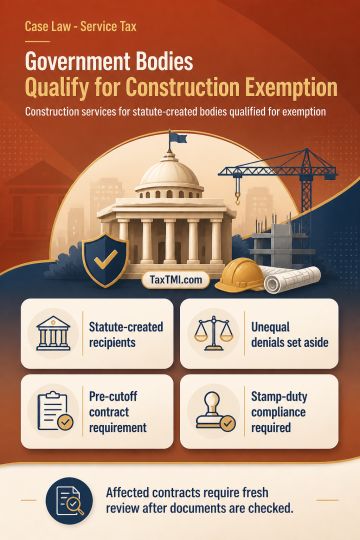
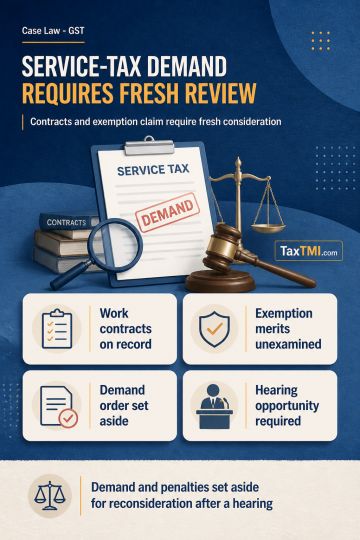
Governmental authority status supports construction-service exemption, while pre-cutoff contract and stamp-duty compliance requires verification on re...
Automated Free Sale and Commerce Certificates enable paperless processing while retaining risk-based manual verification for selected exporter applica...
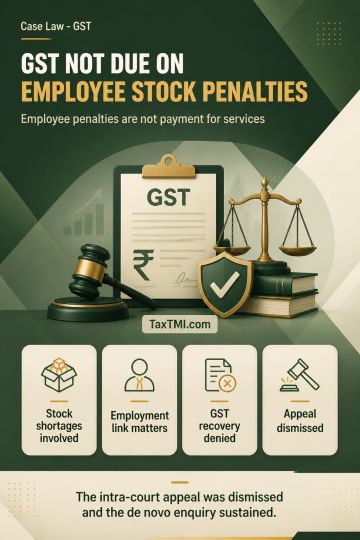
Employee stock-shortage penalties do not constitute consideration for services, preventing GST collection under Schedule II in employment relationship...
NCLAT held that tribunal orders under Section 241 & 242 of Companies Act are enforceable as decrees under Section 424(3), but do not constitute formal decrees under CPC. The Adjudicating Authority correctly rejected applications seeking decree formulation, recognizing that tribunal orders have inherent power to modulate relief to meet justice without adopting rigid procedural formalities. The tribunal's order remains executable as a decree, but cannot be technically drawn as a traditional civil court decree. The appeal was disposed of, affirming the tribunal's discretionary power to determine appropriate relief mechanisms while maintaining the substantive intent of the original adjudication.
NCLAT held that tribunal orders under Section 241 & 242 of Companies Act are enforceable as decrees under Section 424(3), but do not constitute formal decrees under CPC. The Adjudicating Authority correctly rejected applications seeking decree formulation, recognizing that tribunal orders have inherent power to modulate relief to meet justice without adopting rigid procedural formalities. The tribunal's order remains executable as a decree, but cannot be technically drawn as a traditional civil court decree. The appeal was disposed of, affirming the tribunal's discretionary power to determine appropriate relief mechanisms while maintaining the substantive intent of the original adjudication.
Note: It is a system-generated summary and is for quick reference only.
 TaxTMI
  TaxTMI
 of 4828








 Join Channel


