Charitable trust registration requires a specified-violation notice; settled cash deposits and related-party payments did not justify cancellation or ...
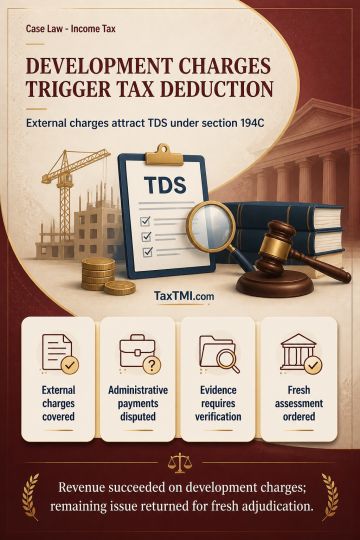
External development charges trigger TDS under section 194C, while disputed administrative payments require factual verification and fresh adjudicatio...
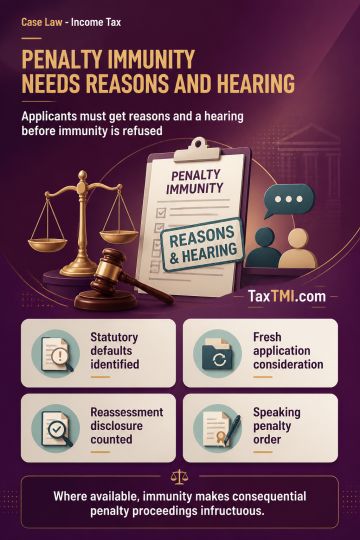
Section 270AA penalty immunity requires identified statutory defaults and a hearing before rejection; reassessment disclosure may constitute under-rep...
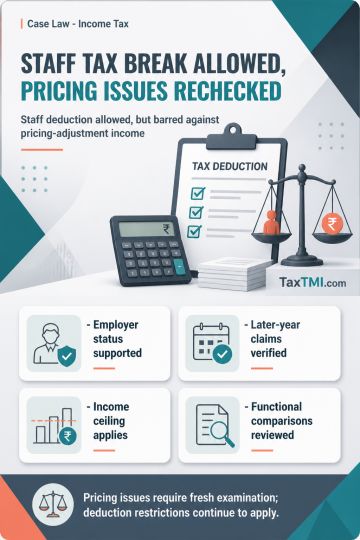
Section 80JJAA employee-cost deduction allowed for deployed staff but barred against transfer-pricing income enhancement, with pricing issues remanded...
Transfer-pricing methodology protects commercially genuine associated-enterprise payments, while pre-2016 secondary adjustments and related notional i...
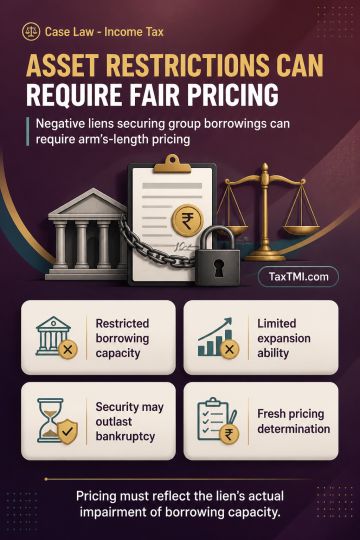
Negative liens over operating assets can constitute international transactions requiring arm's-length pricing reflecting restricted borrowing and expa...
Cross-examination rights in Customs Broker revocation inquiries require witness examination; procedural denial may be cured through fresh adjudication...
SEBI Circular on Derivatives Market Regulation: Key Legal Summary The circular introduces comprehensive measures to enhance trading convenience and strengthen risk monitoring in equity derivatives markets. Key regulatory interventions include: (1) reformulating open interest calculation using delta-adjusted future equivalent methodology, (2) recalibrating market-wide position limits to 15% of free float or 65x average daily delivery value, (3) implementing stricter position creation rules during ban periods, (4) establishing intraday monitoring mechanisms, and (5) introducing position limits for index options and futures with graduated implementation timelines from July 2025 to December 2025. The regulatory framework aims to improve market integrity, reduce manipulation risks, and provide enhanced surveillance capabilities for stock exchanges and clearing corporations.
SEBI Circular on Derivatives Market Regulation: Key Legal Summary The circular introduces comprehensive measures to enhance trading convenience and strengthen risk monitoring in equity derivatives markets. Key regulatory interventions include: (1) reformulating open interest calculation using delta-adjusted future equivalent methodology, (2) recalibrating market-wide position limits to 15% of free float or 65x average daily delivery value, (3) implementing stricter position creation rules during ban periods, (4) establishing intraday monitoring mechanisms, and (5) introducing position limits for index options and futures with graduated implementation timelines from July 2025 to December 2025. The regulatory framework aims to improve market integrity, reduce manipulation risks, and provide enhanced surveillance capabilities for stock exchanges and clearing corporations.
Note: It is a system-generated summary and is for quick reference only.
 TaxTMI
  TaxTMI
 of 4828


















 Join Channel


