Inherited property sale proceeds require capital-gains treatment where ownership is supported by evidence, not suspicion or unverified signature doubt...
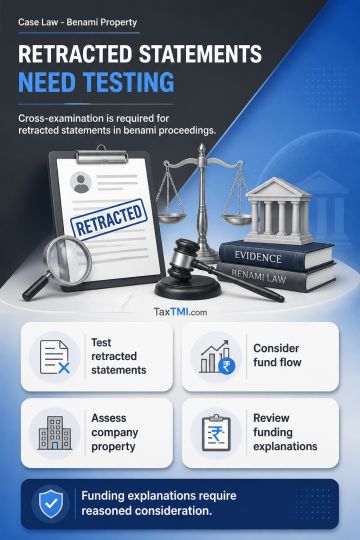
Cross-examination of retracted statements is essential where foundational evidence supports a benami allegation and documented funding explanations re...
Capital-goods exemption covers plant-modernisation accessories, while the import restriction applies only to earlier capital-goods components and spar...
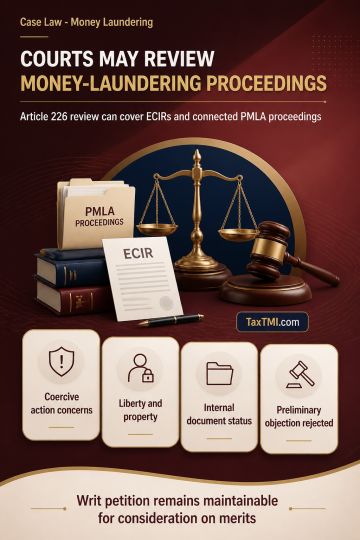
Constitutional judicial review permits challenges to ECIRs and connected money-laundering proceedings where coercive action affects fundamental intere...
HC dismissed the writ petition challenging penalty for fraudulent Input Tax Credit (ITC) availment under CGST Act, Section 122(1)(vii). The court held that writ jurisdiction should not be ordinarily exercised in cases involving ITC fraud, citing precedent. The petitioner was directed to pursue appellate remedies under Section 107 of CGST Act and permitted to file appeal by 15th July, 2025 with pre-deposit. The court emphasized that the appeal would be adjudicated on merits and not dismissed on limitation grounds, thereby preserving the petitioner's substantive rights while maintaining procedural integrity.
HC dismissed the writ petition challenging penalty for fraudulent Input Tax Credit (ITC) availment under CGST Act, Section 122(1)(vii). The court held that writ jurisdiction should not be ordinarily exercised in cases involving ITC fraud, citing precedent. The petitioner was directed to pursue appellate remedies under Section 107 of CGST Act and permitted to file appeal by 15th July, 2025 with pre-deposit. The court emphasized that the appeal would be adjudicated on merits and not dismissed on limitation grounds, thereby preserving the petitioner's substantive rights while maintaining procedural integrity.
Note: It is a system-generated summary and is for quick reference only.
 TaxTMI
 of 4792














 Join Channel


 TaxTMI