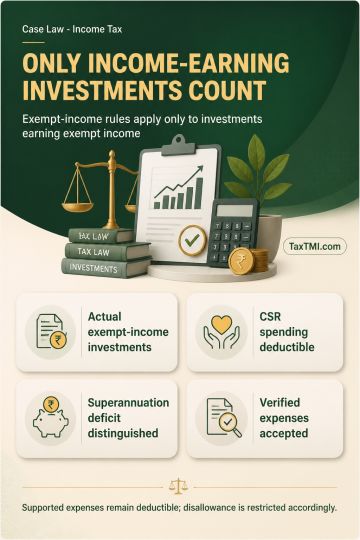
Exempt-income expenditure disallowance is confined to investments that actually generated exempt income, while supported business expenses remain dedu...
Objective characteristics and principal use govern mining-tyre classification, while fresh advance ruling applications may rely on additional technica...
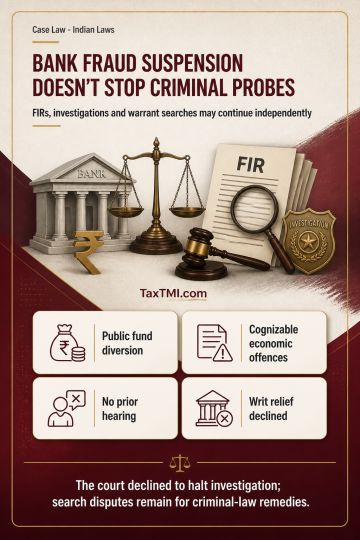
Administrative fraud classification suspension does not halt independent criminal investigation or warrant-based searches into alleged economic offenc...
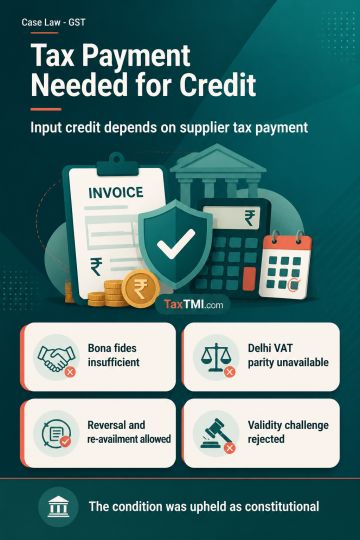
HC upheld the validity of Rule 36(4) in CGST and TNGST Rules, which restricts Input Tax Credit (ITC) availment when suppliers fail to upload invoices under Section 37(1). The court determined that the rule was a temporary regulatory measure to protect government interests and taxpayers from potential recovery proceedings. The restrictions were deemed constitutionally valid and not violative of Article 14, with the amendment designed to ensure partial ITC availability while maintaining compliance mechanisms. The court emphasized that the rule's implementation was a proportionate response to systemic challenges in tax credit documentation, effectively rejecting the constitutional challenge to the regulatory provision.
HC upheld the validity of Rule 36(4) in CGST and TNGST Rules, which restricts Input Tax Credit (ITC) availment when suppliers fail to upload invoices under Section 37(1). The court determined that the rule was a temporary regulatory measure to protect government interests and taxpayers from potential recovery proceedings. The restrictions were deemed constitutionally valid and not violative of Article 14, with the amendment designed to ensure partial ITC availability while maintaining compliance mechanisms. The court emphasized that the rule's implementation was a proportionate response to systemic challenges in tax credit documentation, effectively rejecting the constitutional challenge to the regulatory provision.
Note: It is a system-generated summary and is for quick reference only.
 TaxTMI
 of 4805







 Join Channel


 TaxTMI