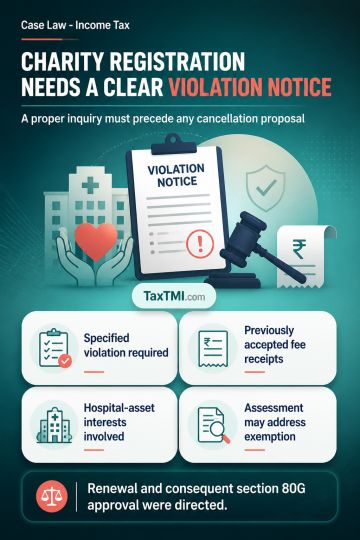
Charitable trust registration requires a specified-violation notice; settled cash deposits and related-party payments did not justify cancellation or ...
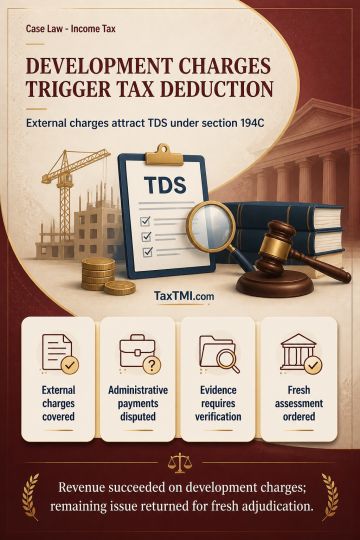
External development charges trigger TDS under section 194C, while disputed administrative payments require factual verification and fresh adjudicatio...
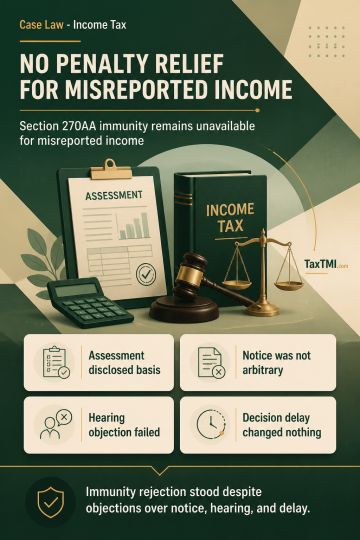
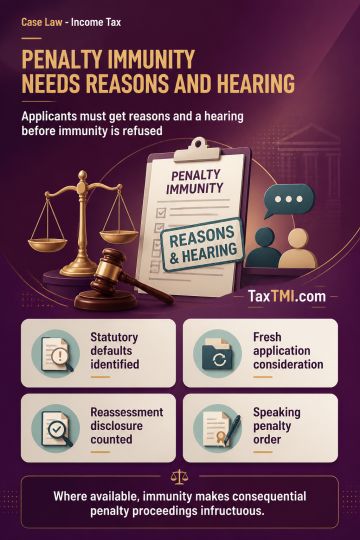
Section 270AA penalty immunity requires identified statutory defaults and a hearing before rejection; reassessment disclosure may constitute under-rep...
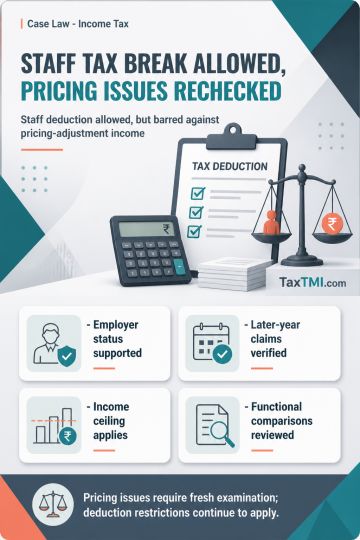
Section 80JJAA employee-cost deduction allowed for deployed staff but barred against transfer-pricing income enhancement, with pricing issues remanded...
Page of 4830
Press 'Enter' after typing page number.
141 to 160 of 96587 Results
❮
❯
❯❯
0 / 200
Expand Note
Add to Folder
No Folders have been created
+
Are you sure you want to delete "My most important" ?
NCLAT upheld the Resolution Plan submitted by the Successful Resolution Applicant, finding no valid grounds for rejection. The Appellate Tribunal determined that the Committee of Creditors (CoC), comprising majority homebuyers, approved the plan with 91% vote share. The Tribunal emphasized that absent specific violations of Section 30(2), the Adjudicating Authority cannot override the CoC's commercial wisdom. No stakeholder raised objections to the valuation, and the Successful Resolution Applicant committed to addressing statutory liabilities. Consequently, the NCLAT set aside the lower court's order, allowing the Resolution Plan and providing relief to the corporate debtor's creditors.
NCLAT upheld the Resolution Plan submitted by the Successful Resolution Applicant, finding no valid grounds for rejection. The Appellate Tribunal determined that the Committee of Creditors (CoC), comprising majority homebuyers, approved the plan with 91% vote share. The Tribunal emphasized that absent specific violations of Section 30(2), the Adjudicating Authority cannot override the CoC's commercial wisdom. No stakeholder raised objections to the valuation, and the Successful Resolution Applicant committed to addressing statutory liabilities. Consequently, the NCLAT set aside the lower court's order, allowing the Resolution Plan and providing relief to the corporate debtor's creditors.
Note: It is a system-generated summary and is for quick reference only.
 TaxTMI
  TaxTMI
 of 4830











 Join Channel


