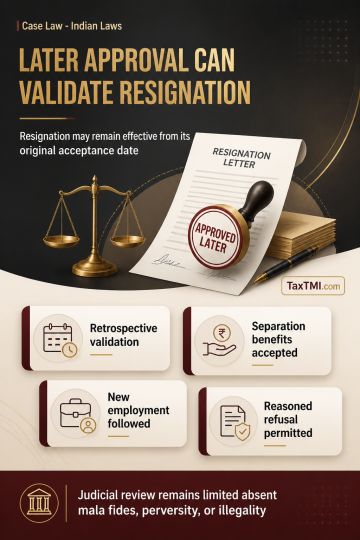
Ratification of resignation acceptance validates separation retrospectively, while withdrawal may be refused through reasoned administrative discretio...
Nature-dependent electricity contracts receive new Ind AS accounting, hedge designation, transition and financial-statement disclosure requirements fr...
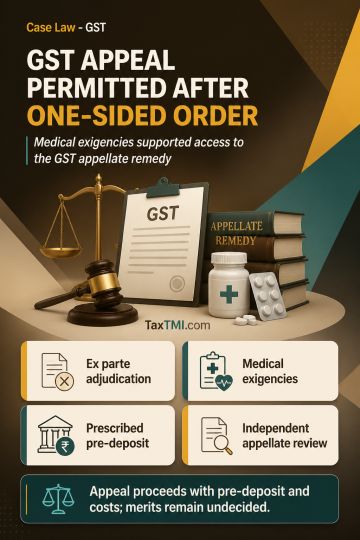
Alternative GST remedy permitted protective writ intervention for ex parte adjudication, preserving independent appellate review of input tax credit d...
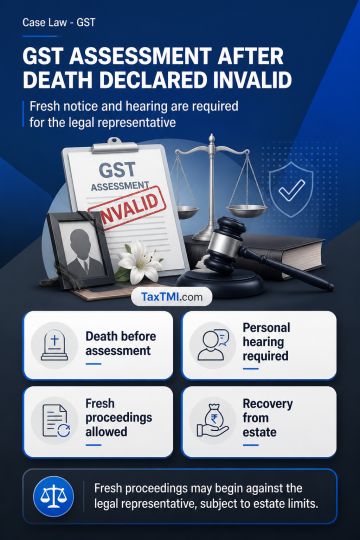
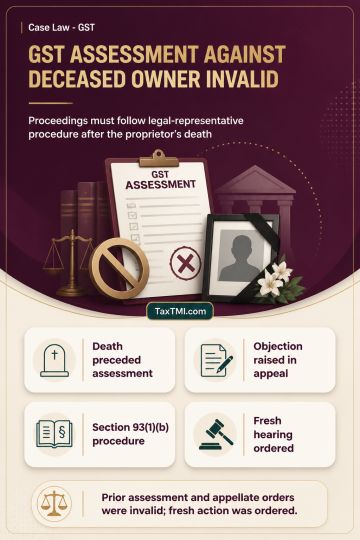
Assessment against deceased sole proprietor requires proceedings against the legal representative, rendering prior assessment and appellate orders inv...
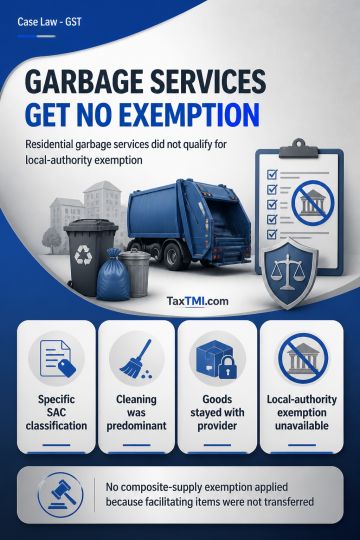
Residential waste collection classification under SAC 999423 defeats composite-supply exemption where facilitating goods are not transferred to the lo...
ITAT ruled on multiple taxation issues for a cooperative society, primarily addressing status classification and tax liability. The tribunal predominantly decided in favor of the assessee, remitting several grounds back to the Assessing Officer for verification. Key holdings include: rejecting the change of status from cooperative society to banking company, negating dividend distribution tax applicability, partially allowing disallowance of expenditures, and directing recalculation of certain tax additions. The tribunal reduced vehicle expense disallowance from 15% to 10%, set aside various additions pending further verification, and confirmed minimal additions where insufficient evidence was provided. Overall, the decision provided significant relief to the assessee by challenging arbitrary tax assessments and requiring substantive proof for disallowances.
ITAT ruled on multiple taxation issues for a cooperative society, primarily addressing status classification and tax liability. The tribunal predominantly decided in favor of the assessee, remitting several grounds back to the Assessing Officer for verification. Key holdings include: rejecting the change of status from cooperative society to banking company, negating dividend distribution tax applicability, partially allowing disallowance of expenditures, and directing recalculation of certain tax additions. The tribunal reduced vehicle expense disallowance from 15% to 10%, set aside various additions pending further verification, and confirmed minimal additions where insufficient evidence was provided. Overall, the decision provided significant relief to the assessee by challenging arbitrary tax assessments and requiring substantive proof for disallowances.
Note: It is a system-generated summary and is for quick reference only.
 TaxTMI
 of 4798





 Join Channel


 TaxTMI
