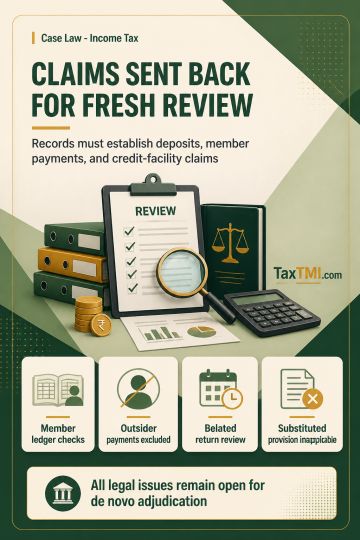
Cooperative society deposits, member-interest TDS exemption and credit-facility deduction claims require verification through records and supporting e...
Customs jurisdiction over EPCG condition breaches survives export-obligation discharge certificates, requiring alleged fraud and misdeclaration to be ...
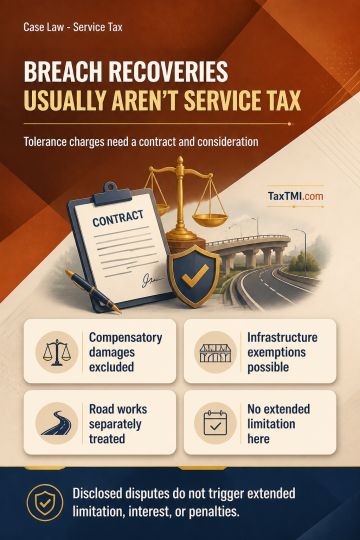
Contractual tolerance requires consideration; breach recoveries, qualifying public infrastructure services and road works escape service tax liability...
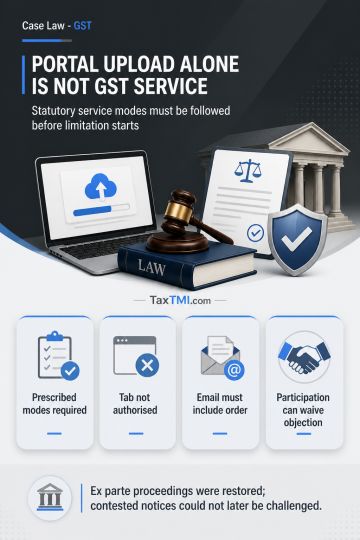
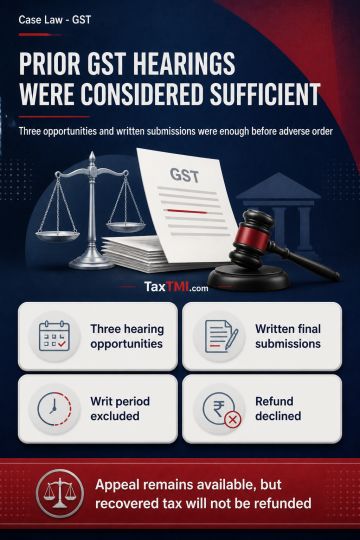
Personal hearing requirements in GST adjudication were satisfied by prior opportunities and written submissions; appellate limitation received writ-pe...
ITAT ruled on multiple taxation issues for a cooperative society, primarily addressing status classification and tax liability. The tribunal predominantly decided in favor of the assessee, remitting several grounds back to the Assessing Officer for verification. Key holdings include: rejecting the change of status from cooperative society to banking company, negating dividend distribution tax applicability, partially allowing disallowance of expenditures, and directing recalculation of certain tax additions. The tribunal reduced vehicle expense disallowance from 15% to 10%, set aside various additions pending further verification, and confirmed minimal additions where insufficient evidence was provided. Overall, the decision provided significant relief to the assessee by challenging arbitrary tax assessments and requiring substantive proof for disallowances.
ITAT ruled on multiple taxation issues for a cooperative society, primarily addressing status classification and tax liability. The tribunal predominantly decided in favor of the assessee, remitting several grounds back to the Assessing Officer for verification. Key holdings include: rejecting the change of status from cooperative society to banking company, negating dividend distribution tax applicability, partially allowing disallowance of expenditures, and directing recalculation of certain tax additions. The tribunal reduced vehicle expense disallowance from 15% to 10%, set aside various additions pending further verification, and confirmed minimal additions where insufficient evidence was provided. Overall, the decision provided significant relief to the assessee by challenging arbitrary tax assessments and requiring substantive proof for disallowances.
Note: It is a system-generated summary and is for quick reference only.
 TaxTMI
 of 4805








 Join Channel


 TaxTMI