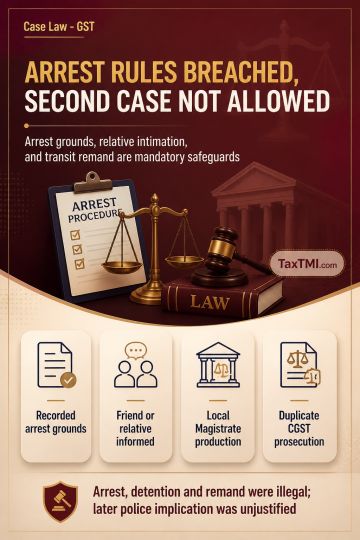
Arrest safeguards require disclosed grounds, relative intimation and transit remand, while duplicate prosecution under the CGST framework is unsustain...
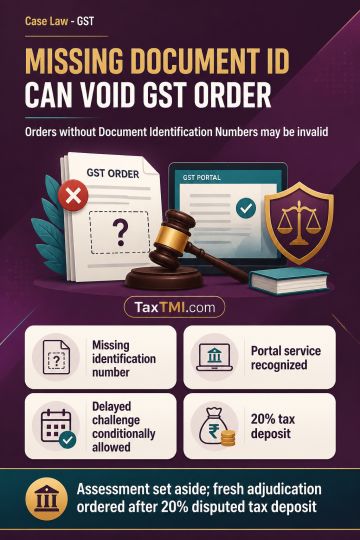
Document Identification Number defects can invalidate GST assessments, with delayed challenges entertained conditionally where patent irregularities e...
Windmill commissioning evidence supported higher depreciation where grid connection and electricity generation proved operational use before the relev...
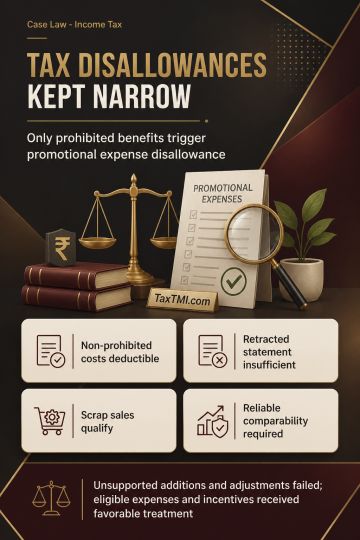
Pharmaceutical promotion and transfer-pricing comparability principles limited disallowances, while uncorroborated search allegations and unsupported ...
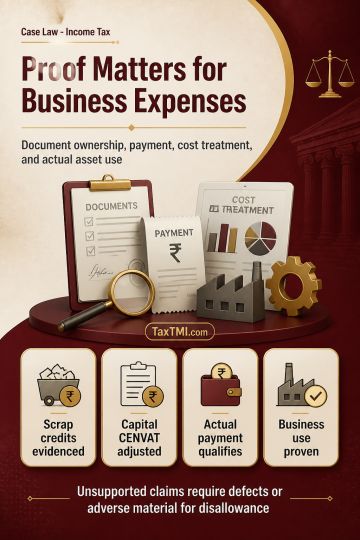
Business expenditure substantiation supports scrap credits, statutory payments and expense claims, while depreciation requires proof of actual busines...
ITAT ruled on multiple taxation issues for a cooperative society, primarily addressing status classification and tax liability. The tribunal predominantly decided in favor of the assessee, remitting several grounds back to the Assessing Officer for verification. Key holdings include: rejecting the change of status from cooperative society to banking company, negating dividend distribution tax applicability, partially allowing disallowance of expenditures, and directing recalculation of certain tax additions. The tribunal reduced vehicle expense disallowance from 15% to 10%, set aside various additions pending further verification, and confirmed minimal additions where insufficient evidence was provided. Overall, the decision provided significant relief to the assessee by challenging arbitrary tax assessments and requiring substantive proof for disallowances.
ITAT ruled on multiple taxation issues for a cooperative society, primarily addressing status classification and tax liability. The tribunal predominantly decided in favor of the assessee, remitting several grounds back to the Assessing Officer for verification. Key holdings include: rejecting the change of status from cooperative society to banking company, negating dividend distribution tax applicability, partially allowing disallowance of expenditures, and directing recalculation of certain tax additions. The tribunal reduced vehicle expense disallowance from 15% to 10%, set aside various additions pending further verification, and confirmed minimal additions where insufficient evidence was provided. Overall, the decision provided significant relief to the assessee by challenging arbitrary tax assessments and requiring substantive proof for disallowances.
Note: It is a system-generated summary and is for quick reference only.
 TaxTMI
 of 4805






 Join Channel


 TaxTMI