Patent-settlement expenditure treated as commercially expedient revenue outlay, with foreign-law restrictions inapplicable before the prospective amen...
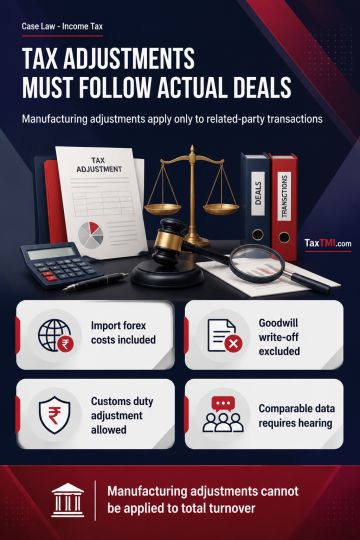
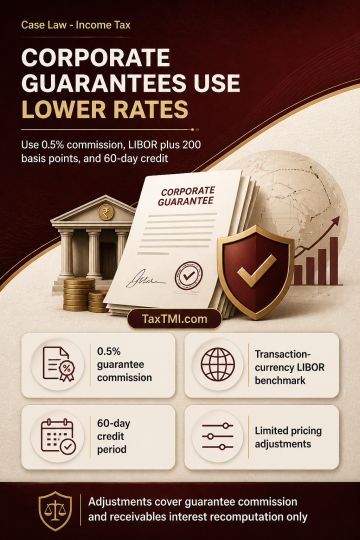
International transaction benchmarking restricts transfer pricing adjustments to associated-enterprise dealings, while functional comparability govern...
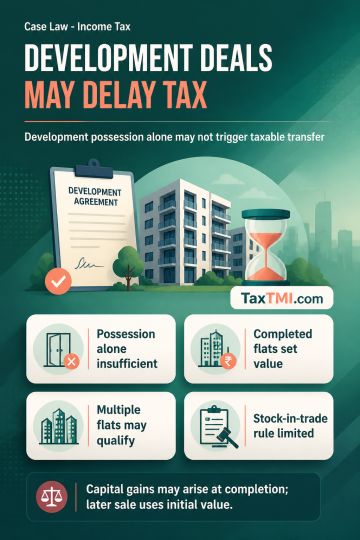
Joint development agreements defer taxable transfer where possession lacks part performance, while completed flats determine consideration and exempti...
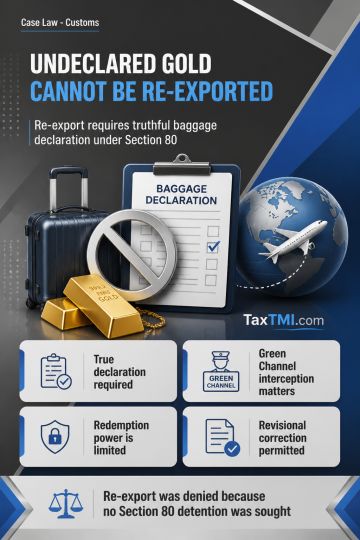
Passenger baggage re-export requires true declaration and cannot be granted indirectly through discretionary redemption of undeclared prohibited goods...
ITAT ruled on multiple taxation issues for a cooperative society, primarily addressing status classification and tax liability. The tribunal predominantly decided in favor of the assessee, remitting several grounds back to the Assessing Officer for verification. Key holdings include: rejecting the change of status from cooperative society to banking company, negating dividend distribution tax applicability, partially allowing disallowance of expenditures, and directing recalculation of certain tax additions. The tribunal reduced vehicle expense disallowance from 15% to 10%, set aside various additions pending further verification, and confirmed minimal additions where insufficient evidence was provided. Overall, the decision provided significant relief to the assessee by challenging arbitrary tax assessments and requiring substantive proof for disallowances.
ITAT ruled on multiple taxation issues for a cooperative society, primarily addressing status classification and tax liability. The tribunal predominantly decided in favor of the assessee, remitting several grounds back to the Assessing Officer for verification. Key holdings include: rejecting the change of status from cooperative society to banking company, negating dividend distribution tax applicability, partially allowing disallowance of expenditures, and directing recalculation of certain tax additions. The tribunal reduced vehicle expense disallowance from 15% to 10%, set aside various additions pending further verification, and confirmed minimal additions where insufficient evidence was provided. Overall, the decision provided significant relief to the assessee by challenging arbitrary tax assessments and requiring substantive proof for disallowances.
Note: It is a system-generated summary and is for quick reference only.
 TaxTMI
 of 4801







 Join Channel


 TaxTMI