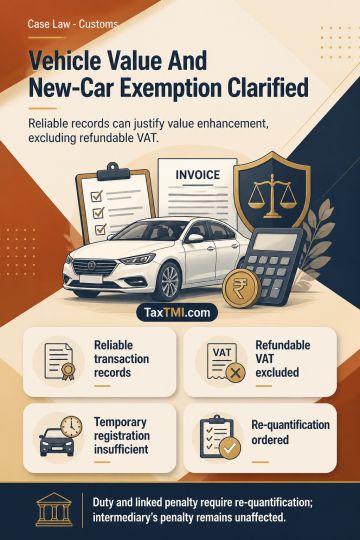
Transaction value rejection requires reliable corroboration; refundable VAT is excluded and temporary registration does not defeat new-vehicle exempti...
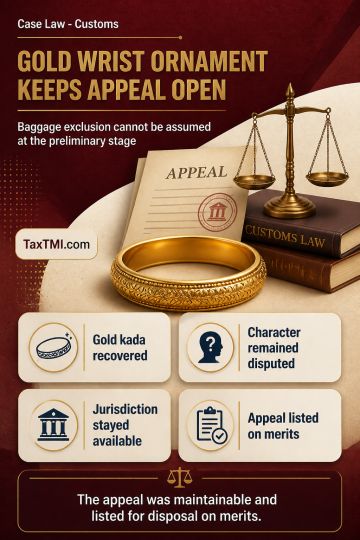
Appellate jurisdiction remains available where a wrist-worn gold ornament cannot conclusively be characterised as imported baggage at the preliminary ...
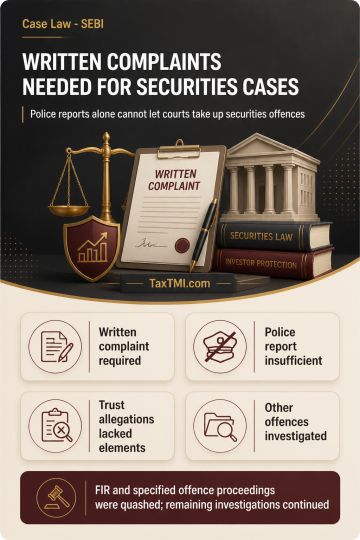
Written complaint requirement bars cognizance on police reports for securities offences, while unsupported breach of trust and cheating allegations fa...
Page of 4801
Press 'Enter' after typing page number.
341 to 360 of 96001 Results
❮
❯
❯❯
0 / 200
Expand Note
Add to Folder
No Folders have been created
+
Are you sure you want to delete "My most important" ?
ITAT ruled on multiple taxation issues for a cooperative society, primarily addressing status classification and tax liability. The tribunal predominantly decided in favor of the assessee, remitting several grounds back to the Assessing Officer for verification. Key holdings include: rejecting the change of status from cooperative society to banking company, negating dividend distribution tax applicability, partially allowing disallowance of expenditures, and directing recalculation of certain tax additions. The tribunal reduced vehicle expense disallowance from 15% to 10%, set aside various additions pending further verification, and confirmed minimal additions where insufficient evidence was provided. Overall, the decision provided significant relief to the assessee by challenging arbitrary tax assessments and requiring substantive proof for disallowances.
ITAT ruled on multiple taxation issues for a cooperative society, primarily addressing status classification and tax liability. The tribunal predominantly decided in favor of the assessee, remitting several grounds back to the Assessing Officer for verification. Key holdings include: rejecting the change of status from cooperative society to banking company, negating dividend distribution tax applicability, partially allowing disallowance of expenditures, and directing recalculation of certain tax additions. The tribunal reduced vehicle expense disallowance from 15% to 10%, set aside various additions pending further verification, and confirmed minimal additions where insufficient evidence was provided. Overall, the decision provided significant relief to the assessee by challenging arbitrary tax assessments and requiring substantive proof for disallowances.
Note: It is a system-generated summary and is for quick reference only.
 TaxTMI
 of 4801



 Join Channel


 TaxTMI