Time-share accommodation classification excludes Club or Association Service where purchasers receive contractual occupancy rights without genuine mem...
CENVAT credit for trading requires reversal, while taxable-service rental credit remains proportionately available and limitation issues await resolut...
Vicarious liability for dishonoured company cheques may extend to non-signatory directors where complaints contain foundational responsibility avermen...
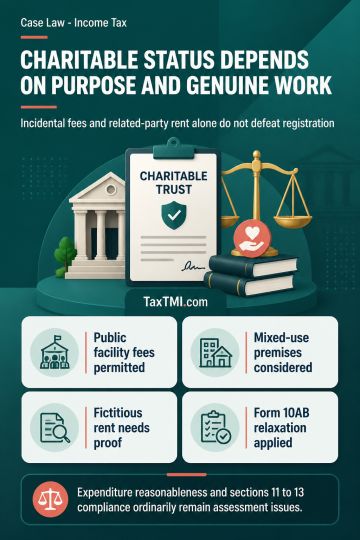
Charitable registration turns on predominant purpose and genuine activities, while incidental fees and related-party rent require supporting adverse m...
Page of 4798
Press 'Enter' after typing page number.
201 to 220 of 95955 Results
❮
❯
❯❯
0 / 200
Expand Note
Add to Folder
No Folders have been created
+
Are you sure you want to delete "My most important" ?
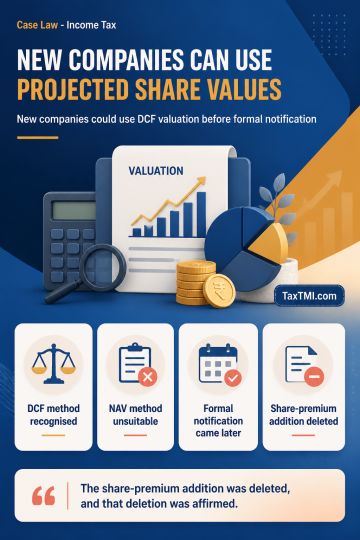
ITAT dismissed Revenue's appeal regarding unexplained expenditure under section 69C. The Tribunal found that the Assessing Officer (AO) erroneously made additions based on unsubstantiated handwritten loose documents without meaningful inquiry. The seized documents lacked corroboration, contained arithmetic mistakes, and did not align with shareholders' records. The Tribunal emphasized that loose sheets are inadmissible without additional evidence under the Indian Evidence Act. The Fair Market Value calculation was deemed appropriate, considering factors like intellectual capital and future profit potential. Ultimately, the appeal was rejected, with the Tribunal concluding that the additions made during the search action were not sacrosanct or conclusive.
ITAT dismissed Revenue's appeal regarding unexplained expenditure under section 69C. The Tribunal found that the Assessing Officer (AO) erroneously made additions based on unsubstantiated handwritten loose documents without meaningful inquiry. The seized documents lacked corroboration, contained arithmetic mistakes, and did not align with shareholders' records. The Tribunal emphasized that loose sheets are inadmissible without additional evidence under the Indian Evidence Act. The Fair Market Value calculation was deemed appropriate, considering factors like intellectual capital and future profit potential. Ultimately, the appeal was rejected, with the Tribunal concluding that the additions made during the search action were not sacrosanct or conclusive.
Note: It is a system-generated summary and is for quick reference only.
 TaxTMI
 of 4798





 Join Channel


 TaxTMI