Employee stock-shortage penalties do not constitute consideration for services, preventing GST collection under Schedule II in employment relationship...
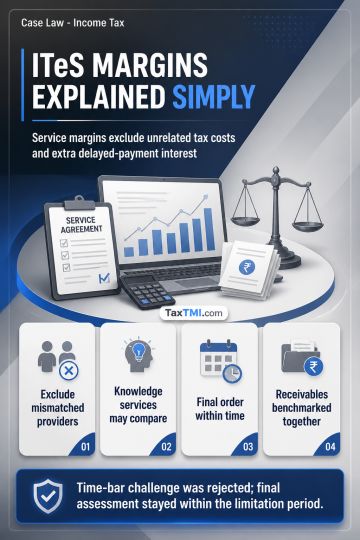
Transfer-pricing treatment of ITeS margins excludes pass-through tax recoveries and separate delayed-receivables interest after working-capital adjust...
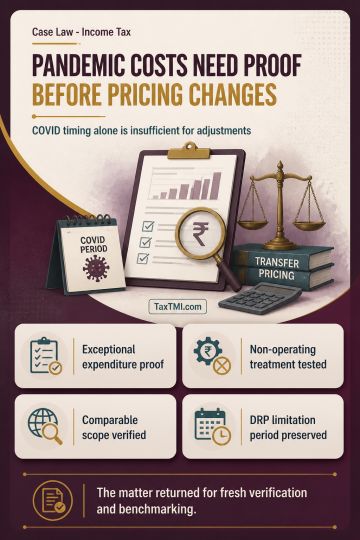
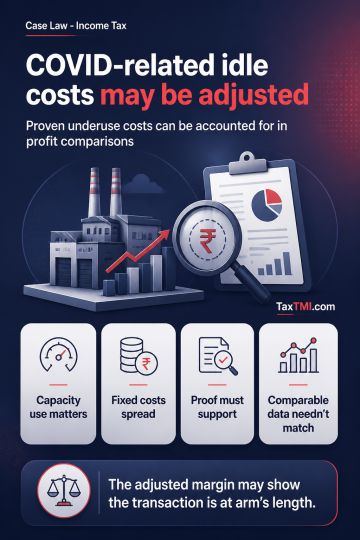
Capacity-utilisation adjustments under TNMM can neutralise substantiated COVID-related idle costs where underutilisation materially affects profitabil...
Page of 4830
Press 'Enter' after typing page number.
181 to 200 of 96587 Results
❮
❯
❯❯
0 / 200
Expand Note
Add to Folder
No Folders have been created
+
Are you sure you want to delete "My most important" ?
ITAT adjudicated a tax surcharge dispute for a private discretionary trust, determining the applicable surcharge rate. The tribunal ruled that surcharge computation must reference specific slab rates prescribed in the Finance Act, rather than applying the maximum marginal rate (MMR) uniformly. Relying on precedent in Aradhya Jain Trust, the tribunal found the surcharge should be calculated at the lower applicable rate of 15% instead of the highest 37% rate. Consequently, the assessee's appeal was allowed, establishing a favorable interpretation of tax surcharge calculation for similar discretionary trust structures.
ITAT adjudicated a tax surcharge dispute for a private discretionary trust, determining the applicable surcharge rate. The tribunal ruled that surcharge computation must reference specific slab rates prescribed in the Finance Act, rather than applying the maximum marginal rate (MMR) uniformly. Relying on precedent in Aradhya Jain Trust, the tribunal found the surcharge should be calculated at the lower applicable rate of 15% instead of the highest 37% rate. Consequently, the assessee's appeal was allowed, establishing a favorable interpretation of tax surcharge calculation for similar discretionary trust structures.
Note: It is a system-generated summary and is for quick reference only.
 TaxTMI
  TaxTMI
 of 4830









 Join Channel


