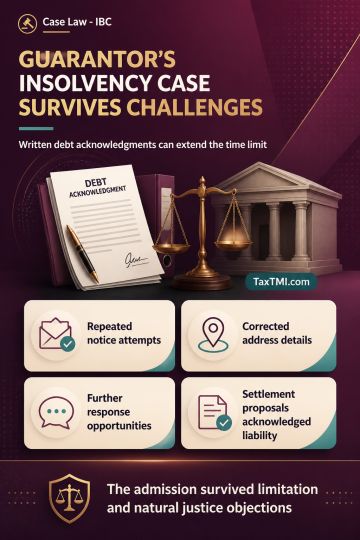
Service of notice and contractual debt acknowledgment preserved insolvency admission against a corporate guarantor despite limitation and natural just...
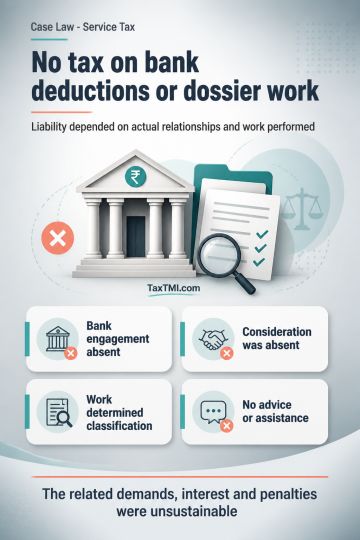
Original works exemption excludes standalone boulder transportation, leaving subcontracted railway-project transport services subject to service tax l...
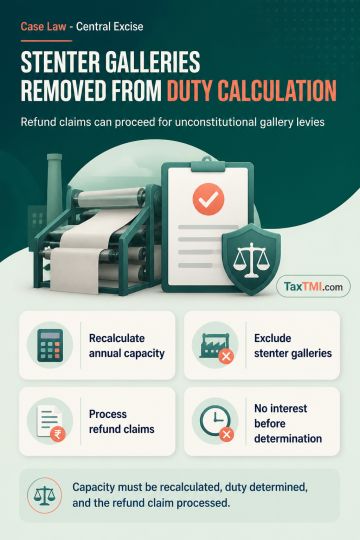
Annual production capacity determinations excluding stenter galleries support refunds for unconstitutional excise levies without an unjust-enrichment ...
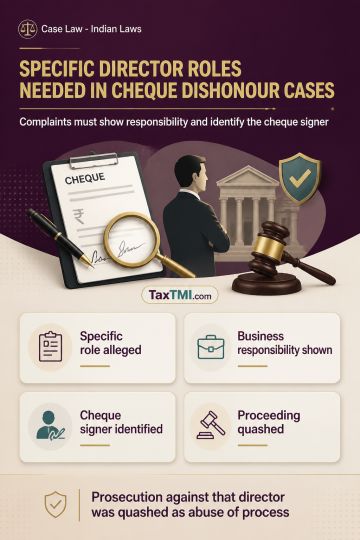
Vicarious liability for cheque dishonour requires specific allegations of responsibility and cheque signatory; generic director allegations cannot sus...
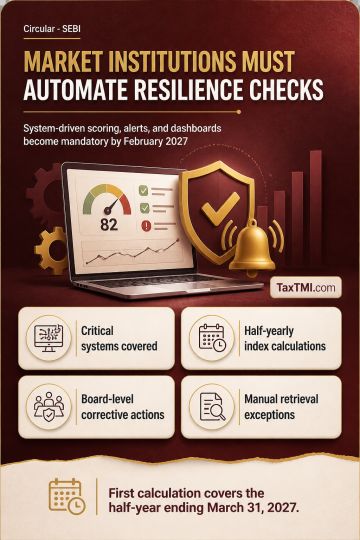
IT Resilience Index requires market infrastructure institutions to automate resilience scoring, early warnings, and continuous service-delivery monito...
SC scrutinized a corruption case involving alleged bribe demand and acceptance. Despite prosecution's claims, critical evidentiary inconsistencies emerged regarding the sequence of events, trap procedure, and witness testimonies. The key witnesses' statements contained material contradictions that undermined the prosecution's narrative. The court found the prosecution failed to establish the accused's guilt beyond reasonable doubt. Applying the principle of benefit of doubt, the SC set aside the lower courts' conviction, emphasizing procedural safeguards in trap cases and the necessity of unimpeachable evidence in corruption allegations. The appellant was acquitted, with the court highlighting the importance of rigorous judicial scrutiny in such proceedings.
SC scrutinized a corruption case involving alleged bribe demand and acceptance. Despite prosecution's claims, critical evidentiary inconsistencies emerged regarding the sequence of events, trap procedure, and witness testimonies. The key witnesses' statements contained material contradictions that undermined the prosecution's narrative. The court found the prosecution failed to establish the accused's guilt beyond reasonable doubt. Applying the principle of benefit of doubt, the SC set aside the lower courts' conviction, emphasizing procedural safeguards in trap cases and the necessity of unimpeachable evidence in corruption allegations. The appellant was acquitted, with the court highlighting the importance of rigorous judicial scrutiny in such proceedings.
Note: It is a system-generated summary and is for quick reference only.
 TaxTMI
  TaxTMI
 of 4828













 Join Channel