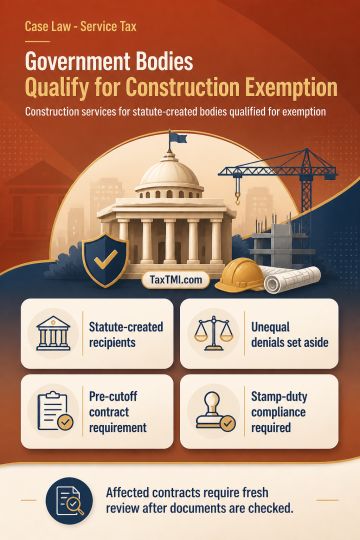
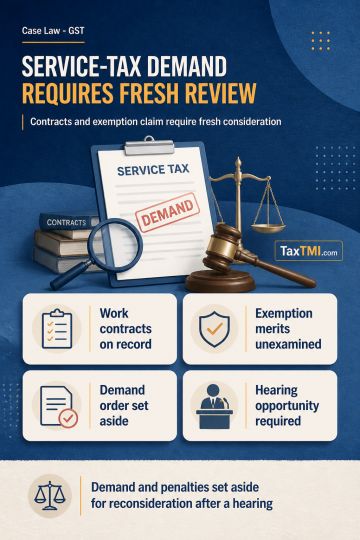
Governmental authority status supports construction-service exemption, while pre-cutoff contract and stamp-duty compliance requires verification on re...
Automated Free Sale and Commerce Certificates enable paperless processing while retaining risk-based manual verification for selected exporter applica...
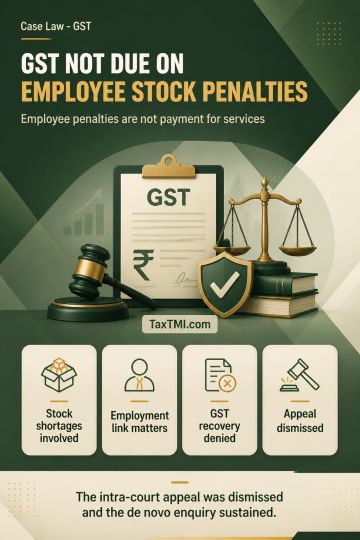
Employee stock-shortage penalties do not constitute consideration for services, preventing GST collection under Schedule II in employment relationship...
HC held that Section 279(2) of Income Tax Act, 1961 empowers Principal Chief Commissioner or Chief Commissioner to suo motu compound offenses under Section 276B. The court found that despite prescribed application forms, authorities retain discretionary power to compound offenses, particularly when defaulted tax deposit with interest occurs prior to complaint filing. Given the significant time lapse between tax deposit and criminal proceedings, the court determined continuation of criminal proceedings would constitute abuse of legal process, thereby allowing petitioner's prayer and effectively terminating the criminal case.
HC held that Section 279(2) of Income Tax Act, 1961 empowers Principal Chief Commissioner or Chief Commissioner to suo motu compound offenses under Section 276B. The court found that despite prescribed application forms, authorities retain discretionary power to compound offenses, particularly when defaulted tax deposit with interest occurs prior to complaint filing. Given the significant time lapse between tax deposit and criminal proceedings, the court determined continuation of criminal proceedings would constitute abuse of legal process, thereby allowing petitioner's prayer and effectively terminating the criminal case.
Note: It is a system-generated summary and is for quick reference only.
 TaxTMI
  TaxTMI
 of 4828











 Join Channel


