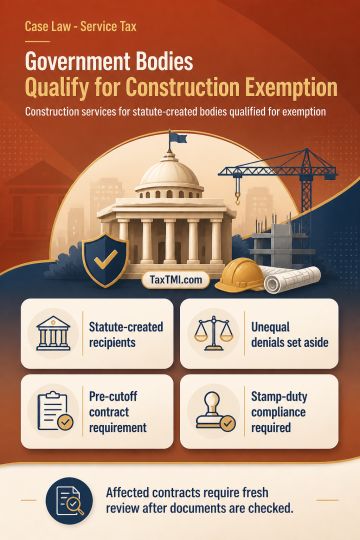
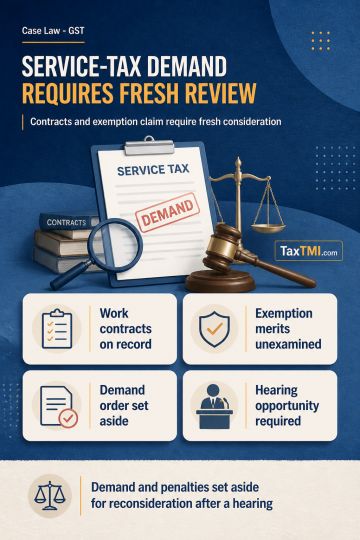
Governmental authority status supports construction-service exemption, while pre-cutoff contract and stamp-duty compliance requires verification on re...
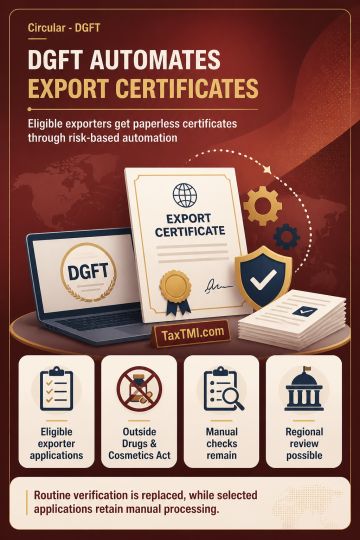
Automated Free Sale and Commerce Certificates enable paperless processing while retaining risk-based manual verification for selected exporter applica...
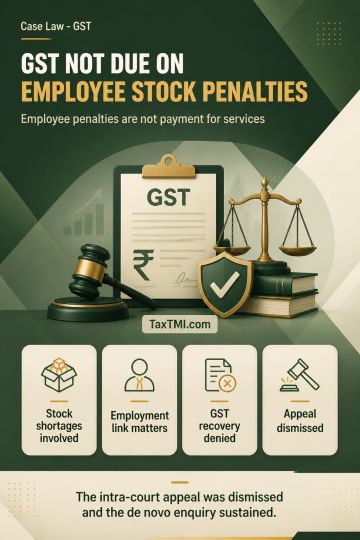
Employee stock-shortage penalties do not constitute consideration for services, preventing GST collection under Schedule II in employment relationship...
ITAT adjudicated multiple taxation issues, allowing partial relief to the assessee. The tribunal primarily focused on procedural and jurisdictional challenges, remanding certain matters back to the Assessing Officer (AO) for fresh verification. Key holdings included: (1) CIT(A) lacked jurisdiction to enhance income through new sources under section 251(2), (2) advances written off to be re-examined by AO with fresh evidence, (3) no disallowance under section 14A due to absence of exempt income, and (4) PF and ESI contribution delays to be reassessed based on salary disbursement dates. The tribunal's approach emphasized procedural fairness and detailed factual re-examination rather than conclusive substantive determinations.
ITAT adjudicated multiple taxation issues, allowing partial relief to the assessee. The tribunal primarily focused on procedural and jurisdictional challenges, remanding certain matters back to the Assessing Officer (AO) for fresh verification. Key holdings included: (1) CIT(A) lacked jurisdiction to enhance income through new sources under section 251(2), (2) advances written off to be re-examined by AO with fresh evidence, (3) no disallowance under section 14A due to absence of exempt income, and (4) PF and ESI contribution delays to be reassessed based on salary disbursement dates. The tribunal's approach emphasized procedural fairness and detailed factual re-examination rather than conclusive substantive determinations.
Note: It is a system-generated summary and is for quick reference only.
 TaxTMI
  TaxTMI
 of 4828






 Join Channel


