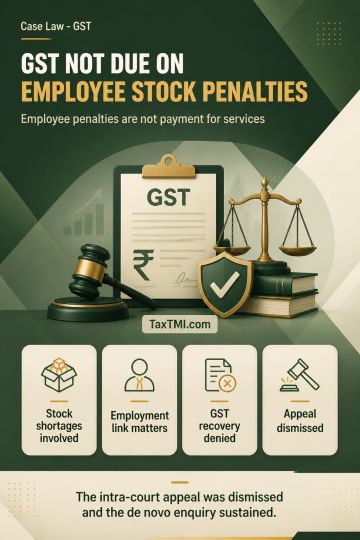
Employee stock-shortage penalties do not constitute consideration for services, preventing GST collection under Schedule II in employment relationship...
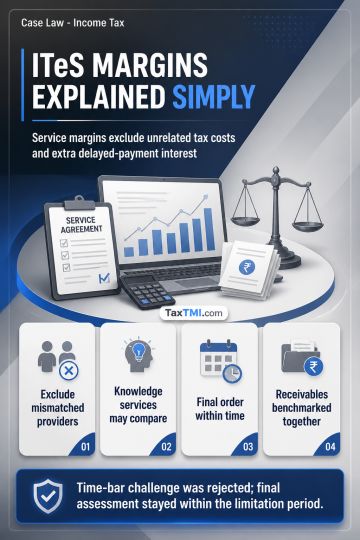
Transfer-pricing treatment of ITeS margins excludes pass-through tax recoveries and separate delayed-receivables interest after working-capital adjust...
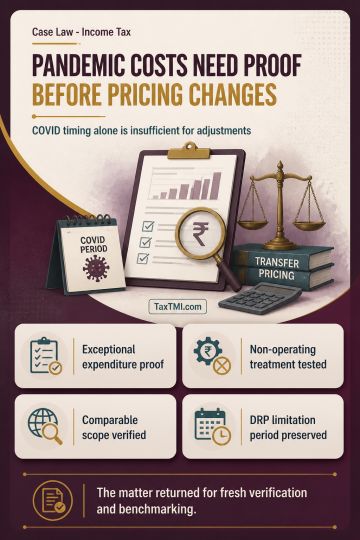
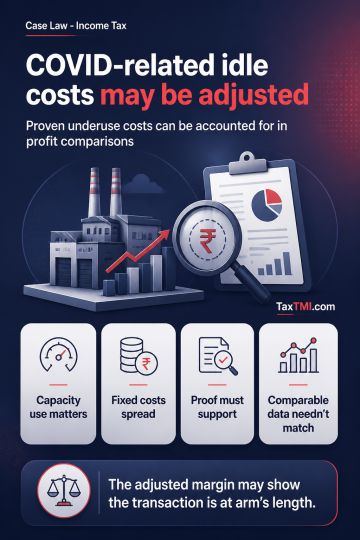
Capacity-utilisation adjustments under TNMM can neutralise substantiated COVID-related idle costs where underutilisation materially affects profitabil...
Page of 4830
Press 'Enter' after typing page number.
181 to 200 of 96587 Results
❮
❯
❯❯
0 / 200
Expand Note
Add to Folder
No Folders have been created
+
Are you sure you want to delete "My most important" ?
ITAT allowed the appeal, setting aside the CIT(A)'s order and deleting additions under Section 69. The tribunal found critical procedural and evidentiary defects in the assessment order, specifically noting that the Assessing Officer (AO) relied solely on an incomplete statement without seeking explanations from directors, failed to establish concrete evidence of unaccounted investments, and improperly concluded deposits were made by directors based on minor clerical errors in forms. The tribunal emphasized that the burden of proof lies with the revenue authority, which failed to substantiate allegations of undisclosed investments made by the assessee. The order was decided in favor of the assessee, effectively quashing the disputed tax additions.
ITAT allowed the appeal, setting aside the CIT(A)'s order and deleting additions under Section 69. The tribunal found critical procedural and evidentiary defects in the assessment order, specifically noting that the Assessing Officer (AO) relied solely on an incomplete statement without seeking explanations from directors, failed to establish concrete evidence of unaccounted investments, and improperly concluded deposits were made by directors based on minor clerical errors in forms. The tribunal emphasized that the burden of proof lies with the revenue authority, which failed to substantiate allegations of undisclosed investments made by the assessee. The order was decided in favor of the assessee, effectively quashing the disputed tax additions.
Note: It is a system-generated summary and is for quick reference only.
 TaxTMI
  TaxTMI
 of 4830






 Join Channel


