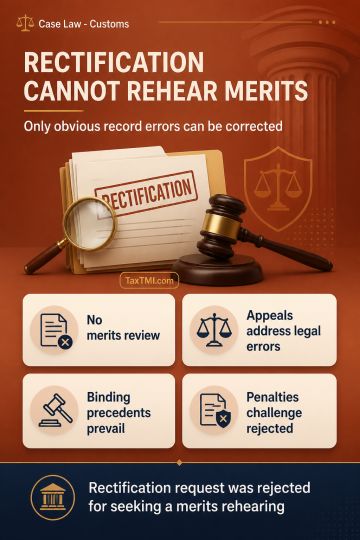
Rectification of mistake remains limited to self-evident record errors, preventing merits review through miscellaneous applications and preserving fin...
Tender creditworthiness conditions may extend to de facto Promoter Directors, with post-participation challenges generally barred absent arbitrariness...
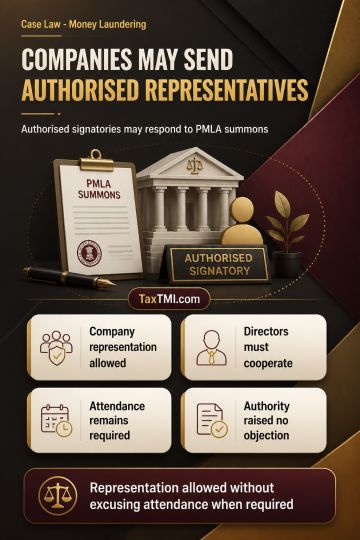
Corporate representation in PMLA summons proceedings permitted through an authorised signatory, subject to directors' continuing cooperation and atten...
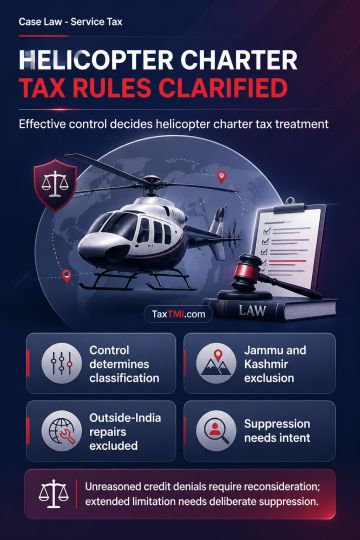
Helicopter charter classification requires effective control analysis, while territorial performance, reasoned credit orders and wilful suppression de...
Page of 4796
Press 'Enter' after typing page number.
781 to 800 of 95918 Results
❮
❯
❯❯
0 / 200
Expand Note
Add to Folder
No Folders have been created
+
Are you sure you want to delete "My most important" ?
In a dispute involving corporate governance and alleged oppressive conduct, the Tri examined multiple allegations against the Respondent No. 1 Company. After comprehensive review of claims including unauthorized share buy-back, remuneration discrepancies, and potential fraudulent transactions, the Tri found no substantive evidence of oppressive practices. The tribunal determined that the Petitioner failed to establish grounds under Section 213 of the Companies Act, 2013. Key findings included: legitimate employment perquisites, timely insurance policy credits, and no proven benami property transactions. The board's dividend discretion was affirmed, and procedural challenges were deemed time-barred. Consequently, the Tri dismissed the petition, ruling no oppressive conduct was demonstrated.
In a dispute involving corporate governance and alleged oppressive conduct, the Tri examined multiple allegations against the Respondent No. 1 Company. After comprehensive review of claims including unauthorized share buy-back, remuneration discrepancies, and potential fraudulent transactions, the Tri found no substantive evidence of oppressive practices. The tribunal determined that the Petitioner failed to establish grounds under Section 213 of the Companies Act, 2013. Key findings included: legitimate employment perquisites, timely insurance policy credits, and no proven benami property transactions. The board's dividend discretion was affirmed, and procedural challenges were deemed time-barred. Consequently, the Tri dismissed the petition, ruling no oppressive conduct was demonstrated.
Note: It is a system-generated summary and is for quick reference only.
 TaxTMI
 of 4796











 Join Channel


 TaxTMI