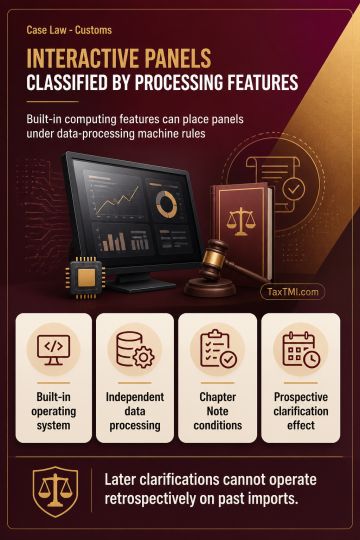
Interactive flat panels meeting automatic data processing conditions are distinguished from monitors, while later classification clarifications apply ...
Statutory transfer formalities invalidated alleged share and property transfers, while retrospective record manipulation constituted oppression and mi...
Provisional attachment of laundered funds and equivalent-value property sustained, with statutory protection limited to pension, gratuity and providen...
Insolvency moratorium does not shield company officers from cheque dishonour prosecution for liability arising before corporate insolvency proceedings...
In a dispute involving corporate governance and alleged oppressive conduct, the Tri examined multiple allegations against the Respondent No. 1 Company. After comprehensive review of claims including unauthorized share buy-back, remuneration discrepancies, and potential fraudulent transactions, the Tri found no substantive evidence of oppressive practices. The tribunal determined that the Petitioner failed to establish grounds under Section 213 of the Companies Act, 2013. Key findings included: legitimate employment perquisites, timely insurance policy credits, and no proven benami property transactions. The board's dividend discretion was affirmed, and procedural challenges were deemed time-barred. Consequently, the Tri dismissed the petition, ruling no oppressive conduct was demonstrated.
In a dispute involving corporate governance and alleged oppressive conduct, the Tri examined multiple allegations against the Respondent No. 1 Company. After comprehensive review of claims including unauthorized share buy-back, remuneration discrepancies, and potential fraudulent transactions, the Tri found no substantive evidence of oppressive practices. The tribunal determined that the Petitioner failed to establish grounds under Section 213 of the Companies Act, 2013. Key findings included: legitimate employment perquisites, timely insurance policy credits, and no proven benami property transactions. The board's dividend discretion was affirmed, and procedural challenges were deemed time-barred. Consequently, the Tri dismissed the petition, ruling no oppressive conduct was demonstrated.
Note: It is a system-generated summary and is for quick reference only.
 TaxTMI
 of 4796



















 Join Channel


 TaxTMI