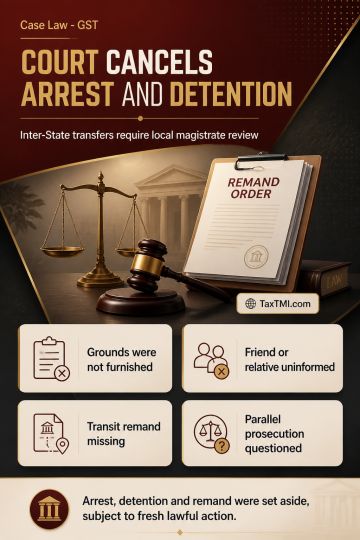
Arrest safeguards and transit remand requirements invalidated detention following inter-State transfer without communicated grounds or magistrate auth...
Arrest safeguards require disclosed grounds, relative intimation and transit remand, while duplicate prosecution under the CGST framework is unsustain...
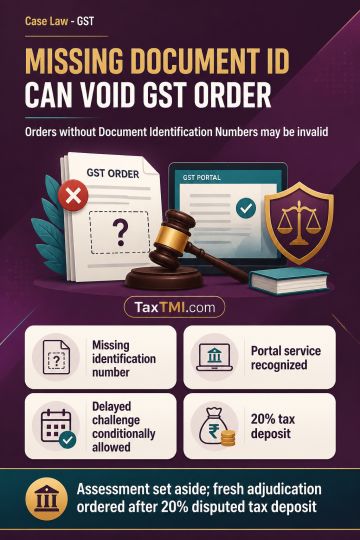
Document Identification Number defects can invalidate GST assessments, with delayed challenges entertained conditionally where patent irregularities e...
Windmill commissioning evidence supported higher depreciation where grid connection and electricity generation proved operational use before the relev...
Pharmaceutical promotion and transfer-pricing comparability principles limited disallowances, while uncorroborated search allegations and unsupported ...
Business expenditure substantiation supports scrap credits, statutory payments and expense claims, while depreciation requires proof of actual busines...
Page of 4794
Press 'Enter' after typing page number.
621 to 640 of 95875 Results
❮
❯
❯❯
0 / 200
Expand Note
Add to Folder
No Folders have been created
+
Are you sure you want to delete "My most important" ?
In a dispute involving corporate governance and alleged oppressive conduct, the Tri examined multiple allegations against the Respondent No. 1 Company. After comprehensive review of claims including unauthorized share buy-back, remuneration discrepancies, and potential fraudulent transactions, the Tri found no substantive evidence of oppressive practices. The tribunal determined that the Petitioner failed to establish grounds under Section 213 of the Companies Act, 2013. Key findings included: legitimate employment perquisites, timely insurance policy credits, and no proven benami property transactions. The board's dividend discretion was affirmed, and procedural challenges were deemed time-barred. Consequently, the Tri dismissed the petition, ruling no oppressive conduct was demonstrated.
In a dispute involving corporate governance and alleged oppressive conduct, the Tri examined multiple allegations against the Respondent No. 1 Company. After comprehensive review of claims including unauthorized share buy-back, remuneration discrepancies, and potential fraudulent transactions, the Tri found no substantive evidence of oppressive practices. The tribunal determined that the Petitioner failed to establish grounds under Section 213 of the Companies Act, 2013. Key findings included: legitimate employment perquisites, timely insurance policy credits, and no proven benami property transactions. The board's dividend discretion was affirmed, and procedural challenges were deemed time-barred. Consequently, the Tri dismissed the petition, ruling no oppressive conduct was demonstrated.
Note: It is a system-generated summary and is for quick reference only.
 TaxTMI
 of 4794


















 Join Channel


 TaxTMI