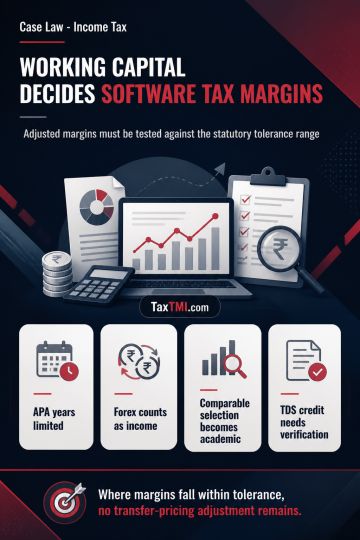
Working-capital adjustment determines whether software-services transfer-pricing margins fall within the statutory tolerance range, eliminating any ad...
Permanent establishment deductions upheld for expatriate salaries, direct costs and trading losses, while head-office costs require fresh classificati...
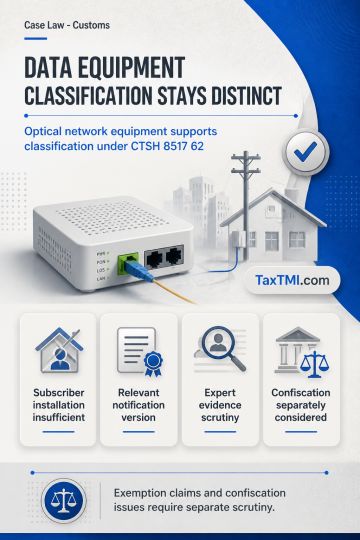
Data transmission equipment classification under CTSH 8517 62 remains distinct from residual classification, with exemption evidence requiring scrutin...
HC dismissed the appeal involving tax computation for the period 1st April 2018 to 31st March 2019, where the original order was passed ex parte due to non-response to show cause notice. Despite time limitation challenges, the court determined that remanding the matter to the appellate authority would be most appropriate. The HC noted the electronic availability of records and the potential for more efficient factual assessment by the appellate authority. Consequently, the petition was disposed of by remanding the case back to the appellate authority for substantive merit-based adjudication, effectively providing the petitioner an opportunity to present their case and challenge the original tax order.
HC dismissed the appeal involving tax computation for the period 1st April 2018 to 31st March 2019, where the original order was passed ex parte due to non-response to show cause notice. Despite time limitation challenges, the court determined that remanding the matter to the appellate authority would be most appropriate. The HC noted the electronic availability of records and the potential for more efficient factual assessment by the appellate authority. Consequently, the petition was disposed of by remanding the case back to the appellate authority for substantive merit-based adjudication, effectively providing the petitioner an opportunity to present their case and challenge the original tax order.
Note: It is a system-generated summary and is for quick reference only.
 TaxTMI
 of 4805

















 Join Channel


 TaxTMI